
Starting a food trailer business gets expensive when decisions happen in the wrong order. Buying a trailer first and asking about the menu, equipment, utilities, tow vehicle, and local review later can force changes that were avoidable on paper.
BJP Trailers approaches the conversation from the opposite direction. Start with what you plan to sell, how the busiest part of service should work, where the trailer will operate, and what the reviewing authorities expect. Then compare actual inventory or organize a custom concession trailer brief around that operation.
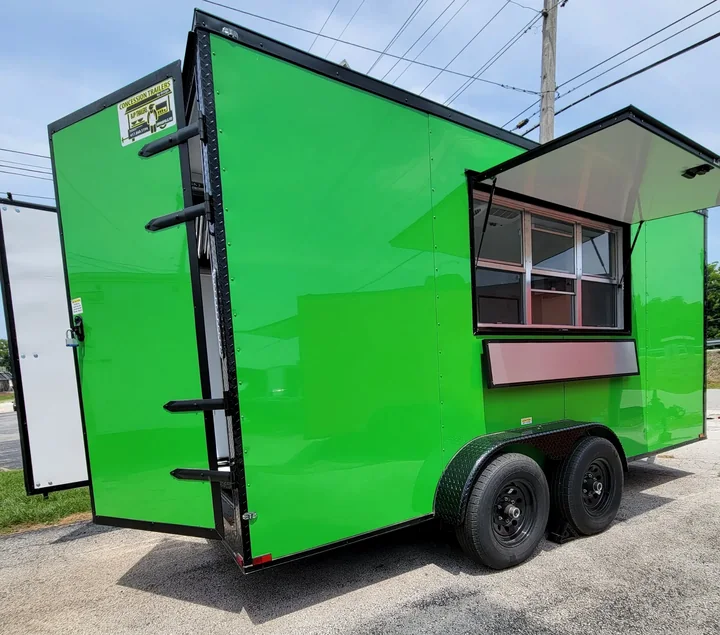
The short answer: build the operation before you buy the trailer.
Define the menu and service model, research the market, identify local authorities, build an equipment and utility list, choose the correct trailer and tow plan, calculate the full opening budget, submit plans when required, complete inspections, and test the entire operation before opening. The exact order varies by jurisdiction, but the trailer purchase should follow—not lead—the operating plan.
That sequence matters whether you call the unit a food trailer, concession trailer, mobile kitchen, coffee trailer, catering trailer, or vending trailer. Seller language is not a substitute for the classification used by your health department, fire authority, licensing office, zoning department, venue, insurer, or lender. Tell each reviewer exactly what you will prepare and how the unit will operate.
- Define the concept.Menu, customers, venues, crew, volume, prep, storage, and service style.
- Validate the market.Demand, competition, pricing, recurring sites, events, and seasonality.
- Map the approval path.Business, tax, health, fire, zoning, parking, commissary, and event questions.
- Build the equipment schedule.Cooking, refrigeration, sinks, water, electrical, fuel, ventilation, and suppression.
- Choose the platform.Trailer type, usable dimensions, axles, weight, tow vehicle, windows, and layout.
- Price the complete launch.Purchase, equipment, professional work, permits, transport, insurance, branding, inventory, and reserve.
- Complete review and inspection.Submit the required documents, resolve corrections, test systems, and prepare for opening day.
Define your food trailer concept and busiest service period.
“I want a 16-foot concession trailer” is not yet a usable build brief. A useful brief begins with the menu and the busiest fifteen minutes of a normal service. Who receives the order? Where is payment taken? Which products move from cold storage to prep, cooking, holding, assembly, and the service window? Where do dirty tools, clean tools, packaging, personal items, chemicals, and waste go?
A coffee or beverage trailer may need significant electrical capacity, clean-water planning, ice production or storage, refrigeration, cup storage, flavor organization, and a very fast barista path. A burger-and-fry concept shifts the conversation toward the hot line, hood, fire-suppression review, cold prep, makeup air, grease handling, hot holding, and safe handoff. A barbecue porch build may add travel-securement, fuel, exterior cooking, carving, holding, and venue-clearance questions. A frozen-dessert trailer can be limited more by freezer recovery and summer electrical load than by counter space.
Bring that information to BJP before asking which food trailer is “best.” It gives the team something real to compare against current inventory, helps you compare food trailers for sale, and makes custom food trailer planning much more productive.
Validate the market and write a food trailer business plan you will actually use.
A business plan does not need to be a thick binder. It needs to answer the decisions that control cash, capacity, and risk. Research where customers already buy food like yours, which events or private sites accept mobile vendors, how seasonality affects demand, what nearby competitors charge, and how many orders your planned crew and equipment can realistically produce.
The U.S. Small Business Administration’s planning guidance puts market research, competitive analysis, business planning, and startup-cost calculation before funding and launch. For a food trailer, that means separating a good menu idea from a workable operating model.
- Define the customer and the reason they will choose you.
- List recurring sales locations before assuming event revenue will carry the business.
- Price recipes with ingredients, packaging, waste, card fees, labor, site fees, fuel, and tax in mind.
- Estimate capacity from equipment and crew flow, not from an optimistic sales target.
- Plan for slow weather, repairs, permit delays, event cancellations, and seasonal changes.
- Keep personal living expenses separate from the money required to open and operate the business.
A clear plan also helps you decide whether to start with a compact window-service concession trailer, a complete mobile kitchen, a used trailer that needs carefully scoped changes, or a custom build designed for a larger menu and crew.
Build a menu-first food trailer equipment and utility schedule.
Do not begin with a generic list of appliances copied from another concept. Begin with the process for each menu item, then identify the equipment required to receive, store, prepare, cook, hold, assemble, serve, wash, and close. Record the make, model, dimensions, installation clearances, power or fuel requirements, water connections, ventilation needs, and heat output for every major item.
Food production
- Cold and frozen storage
- Prep tables and work surfaces
- Griddles, fryers, ranges, ovens, warmers, or specialty equipment
- Hot and cold holding
- Smallwares, utensils, and secure travel storage
Water and sanitation
- Handwashing and warewashing plan
- Fresh-water and wastewater capacity
- Water heating and pump requirements
- Cleanable finishes and chemical storage
- Trash, grease, and end-of-day procedures
Power, fuel, and air
- Shore-power and generator strategy
- Circuits, service size, startup loads, and reserve
- Propane or other fuel planning
- Hood, exhaust, makeup air, and suppression review
- Heating, cooling, lighting, POS, and exterior loads
BJP’s dedicated food trailer equipment and utilities guide provides the broader checklist. Then use the 2026 food trailer fire-safety and suppression guide to isolate hood, propane, extinguisher, electrical, service-record and inspection questions.
Choose the trailer type, size, layout, and tow plan as one system.
Food trailer vs. concession trailer: what is the difference?
In everyday sales language, the terms often overlap. “Food trailer” may suggest a more complete mobile kitchen, while “concession trailer” may suggest service-window sales, snacks, beverages, or event vending. Neither label tells you enough to buy safely. A concession trailer can contain a complete hot line, and a food trailer can support a limited menu. The written equipment and utility specification is more important than the name in the listing.
| Planning question | Light concession service | Complete mobile kitchen |
|---|---|---|
| Menu | Packaged items, beverages, simple assembly, or limited heating | Multiple cooked-to-order items, sides, holding, and more involved prep |
| Equipment | May emphasize counters, cold storage, beverage equipment, and serving speed | May add a hot line, ventilation, suppression, larger refrigeration, prep, and holding |
| Utilities | Can still require substantial power, water, ice, or refrigeration | Often requires a more complex power, fuel, water, wastewater, and ventilation plan |
| Crew flow | Short order-and-handoff path | Separate receiving, storage, prep, cook, assembly, service, and washing zones |
| Correct decision | Use the actual menu, equipment models, local review, and written trailer specification—not the sales label. | |
Choose usable capacity, not length alone.
Two trailers with the same exterior length can provide very different working space. Wheel boxes, wall thickness, cabinets, tanks, porches, restroom compartments, doors, windows, counters, equipment clearances, and aisle width all change the usable floorplan. Review BJP’s food trailer size and layout guide, then trace the complete service path at scale.
- Can crew members pass without crossing hot, sharp, clean, and dirty work?
- Can every appliance door, filter, control panel, and service point be accessed?
- Is there enough storage to avoid boxes, chemicals, or personal items in work paths?
- Do the service windows fit the customer queue, payment process, and handoff plan?
- Will the trailer fit the gates, turns, slopes, curbs, parking spaces, and overhead clearances at recurring sites?
Plan around loaded weight and the complete towing combination.
Equipment, water, propane, food, ice, packaging, smallwares, generators, batteries, and personal gear all add weight. Confirm the trailer’s ratings and the intended loading plan, then compare them with the tow vehicle, hitch, brake controller, tires, payload, and manufacturer guidance. Do not assume that an empty trailer weight or the fact that a truck can pull the unit means the complete combination is appropriate.
Resolve equipment and utility problems on paper before construction.
The FDA’s Food Establishment Plan Review Guide describes plan review as a way to identify equipment, electrical, mechanical, and plumbing problems before costly purchases and construction. Ask your reviewing authority what it wants to see and in what format.
A useful submission or builder packet may include the menu, scaled floorplan, equipment schedule and specification sheets, finish materials, plumbing diagram, fresh- and wastewater capacities, water-heater information, electrical load schedule, fuel layout, ventilation details, suppression information, commissary or support-facility plan, and operating procedures. Requirements vary, so use the local checklist—not an internet template—as the final authority.
When a reviewer requests a change, update the floorplan, equipment schedule, utility calculations, and written quote together. A small equipment substitution can change electrical load, heat, ventilation, clearances, plumbing, storage, balance, and price.
Confirm sanitation, food-safety, ventilation, propane, and fire expectations.
The FDA Food Code is a model for retail food safety; jurisdictions choose whether and how to adopt or modify it. That is why a requirement seen in another state—or even a nearby city—may not be the final answer for your project.
Ask which food-equipment certifications or listings the reviewer accepts. NSF food-equipment standards address sanitation, construction, and performance across many categories, but the local authority decides what documentation it requires. Direct hood, commercial-cooking, LP-gas, suppression, extinguisher, clearance, and inspection questions to the fire authority. The National Fire Protection Association’s mobile-food safety resources are a useful starting point for that conversation.
Not every food trailer needs the same sink package, commissary, hood, suppression system, generator, water capacity, or equipment certification. The menu, cooking methods, equipment, facility type, and local rules control the answer.
Calculate the full food trailer opening budget—not only the purchase price.
Online price comparisons can be misleading when one trailer is a shell, another includes basic counters and windows, and a third includes installed commercial equipment, plumbing, electrical work, ventilation, suppression, tanks, generator equipment, HVAC, graphics, or delivery. Ask for a written specification that states exactly what is included, excluded, installed, used, new, warrantied, pending, or customer-supplied.
Separate required opening costs from optional upgrades and keep a reserve after the trailer is paid for. BJP’s trailer financing resources can help you organize questions before applying, but approval, rates, terms, and allowed uses come from the lender.
Compare an in-stock, used, or custom concession trailer with the same checklist.
Each path can make sense. Current inventory can shorten the search when a real unit matches the menu and local review. A used food trailer may provide value when its condition, documentation, equipment, systems, and required changes are understood. A custom direction gives you more control over workflow and systems, but the brief must be specific enough to price and review.
Compare the exact unit.
Verify current status, physical location, price, VIN or stock reference, dimensions, ratings, equipment, utilities, condition, and what is included before traveling.
Shop BJP inventoryInspect the history and changes.
Review title, frame, roof, seams, axles, tires, brakes, wiring, plumbing, tanks, appliances, ventilation, suppression, repairs, modifications, and service records.
View used trailersPrice a written operating brief.
Provide the menu, equipment models, layout, crew, utilities, finish, weight, tow plan, local-review notes, destination, and target timing.
Plan a custom food trailerFor any BJP listing, call to confirm current price, availability, equipment, specification, and physical location. Inventory changes, and not every unit displayed online should be assumed to be available or on the Springfield property at the moment you plan to travel.
Complete approvals, test the systems, and rehearse opening day.
Do not treat the trailer’s arrival as the end of the launch. Finish required applications, training, insurance, plan corrections, inspections, registration, vendor agreements, storage, and commissary arrangements. Avoid changing an approved plan without asking whether the change needs review.
Then test the trailer under realistic demand. Run refrigeration, cooking, water heating, pumps, lighting, POS, HVAC, and other loads together. Fill and drain systems using the intended procedures. Load food, packaging, smallwares, chemicals, generator equipment, fuel, and personal items in their travel locations. Confirm the tow setup with the trailer loaded for operation.
- Practice setup, leveling, power, water, fuel, ventilation, and shutdown.
- Run a timed service with the planned crew and full menu.
- Measure where tickets slow down and where people cross paths.
- Test cleaning, dish flow, waste, grease, and end-of-day storage.
- Carry required records, permits, inspection documents, and emergency contacts.
- Use a limited soft opening to find problems before the first high-volume event.
Bring BJP the operation—not just a trailer size.
BJP Trailers operates from one Springfield, Missouri show lot and works with buyers who plan to pick up or request transport to destinations nationwide. The most useful first conversation is specific. Bring the following information so the team can compare real inventory or help organize a custom trailer brief:
- Your complete menu and food-preparation steps
- Expected crew and busiest service volume
- First city, county, and state of operation
- Any plan-review checklist or written agency feedback
- Equipment make, model, dimensions, power, fuel, and ventilation information
- Fresh-water, wastewater, warewashing, and commissary plan
- Shore power, generator, battery, and propane direction
- Storage, service-window, POS, and customer-handoff needs
- Tow vehicle, hitch, route, and storage plan
- Required opening date and what must happen before it
- Purchase budget plus a separate launch reserve
- Pickup plan or exact transport destination and receiving access
Ready to compare a food or concession trailer?
Shop actual listings, review the buying process, or send BJP the menu and operating plan you want the trailer to support.
Common questions before starting a concession trailer business.
What permits and licenses do I need for a food trailer?
The answer depends on the business, menu, facility, and jurisdiction. Possible requirements include business and tax registrations, mobile-food or food-establishment permits, plan review, health and fire inspections, zoning or vending approval, parking permission, commissary documentation, food-safety credentials, trailer registration, event approval, and insurance. Ask the authorities responsible for your first operating location for the exact checklist.
Should I contact the health department before buying a food trailer?
Yes. Describe the menu, preparation steps, equipment, water and wastewater plan, commissary or support facility, and first operating location. Ask whether plans must be approved before purchase or construction and what equipment documentation the reviewer expects.
What equipment does a food trailer need?
Equipment follows the menu and local review. Common categories include refrigeration, cooking or heating, hot and cold holding, prep surfaces, handwashing, warewashing, water heating, fresh and wastewater systems, electrical service, generator or shore power, fuel, ventilation, suppression, HVAC, storage, lighting, POS, and secure travel storage. Not every concept needs every item.
Does every concession trailer need a three-compartment sink, hood, or commissary?
Do not assume a universal answer. Requirements can change with the menu, cooking process, equipment, food source, facility classification, and local code. Get the decision in writing from the authority reviewing your proposed operation.
How much does it cost to start a food trailer business?
There is no honest single national number. The total depends on the trailer, installed equipment, utilities, ventilation, professional work, permits, tax, title, insurance, tow vehicle, transport, branding, POS, commissary or storage, opening inventory, payroll, and working reserve. Compare itemized written specifications, not headline prices.
Is a food trailer or food truck better?
Neither is automatically better. A trailer separates the kitchen from the tow vehicle and can provide flexible space, but it requires an appropriate towing, parking, and setup plan. A truck combines the kitchen and vehicle, which can simplify some moves but ties vehicle maintenance to the entire operation. Compare your route, sites, crew, space, budget, and local rules.
What size food trailer should I buy?
Choose the smallest unit that safely supports the complete equipment package, required clearances, storage, crew flow, service windows, utilities, loaded weight, and recurring sites—with reasonable room for the operation to work. Exterior length alone is not enough.
Should I buy an in-stock, used, or custom food trailer?
Choose the path that best matches the written operating brief. In-stock works when the exact unit fits. Used can work when condition, history, documents, equipment, and required changes are clear. Custom is useful when menu and workflow need a specific layout. Confirm price, location, status, equipment, inclusions, and terms for the exact trailer.
Can BJP guarantee that a trailer will pass my local inspection?
No dealer can replace the authority that reviews your operation. BJP can help organize the trailer specification and answer product questions, but you should submit the proposed menu, floorplan, equipment, utilities, and supporting documents to the appropriate local agencies before committing.
Does BJP sell food and concession trailers to buyers outside Missouri?
Yes. Buyers can compare BJP inventory online, visit the Springfield show lot, arrange pickup, or ask for transport pricing to an exact address. Call before traveling to confirm the trailer’s current status, physical location, price, equipment, and availability.
Resources referenced in this guide.
- U.S. Small Business Administration: Plan Your Business
- U.S. Food and Drug Administration: How to Start a Food Business
- FDA: Food Establishment Plan Review Guide
- FDA Food Code
- NSF Food Equipment Standards
- National Fire Protection Association: Mobile Food Safety
These resources provide general planning information. Your state and local authorities determine the requirements for your business and operating location.