Menu & throughput
Document every product, cooking process, batch size, cold and hot holding time, peak orders per hour, packaging, and service model.

Turn your menu, equipment, crew, service volume, utilities, tow plan, operating market, timeline, and budget into a clearer custom trailer brief with BJP.
Color, flooring, counters, and graphics matter, but they cannot rescue an undersized hood, weak cold holding, overloaded electrical plan, poor crew flow, or incorrect wastewater capacity.
Document every product, cooking process, batch size, cold and hot holding time, peak orders per hour, packaging, and service model.
Use actual make and model information when possible so voltage, amperage, fuel, heat, ventilation, water, drain, clearance, and weight are not guesses.
Draw receiving, storage, prep, cooking, holding, POS, handoff, handwashing, warewashing, and cleaning paths for the real crew.
Name the first operating jurisdiction, confirm the tow vehicle, and share the exact pickup or destination details before final pricing.
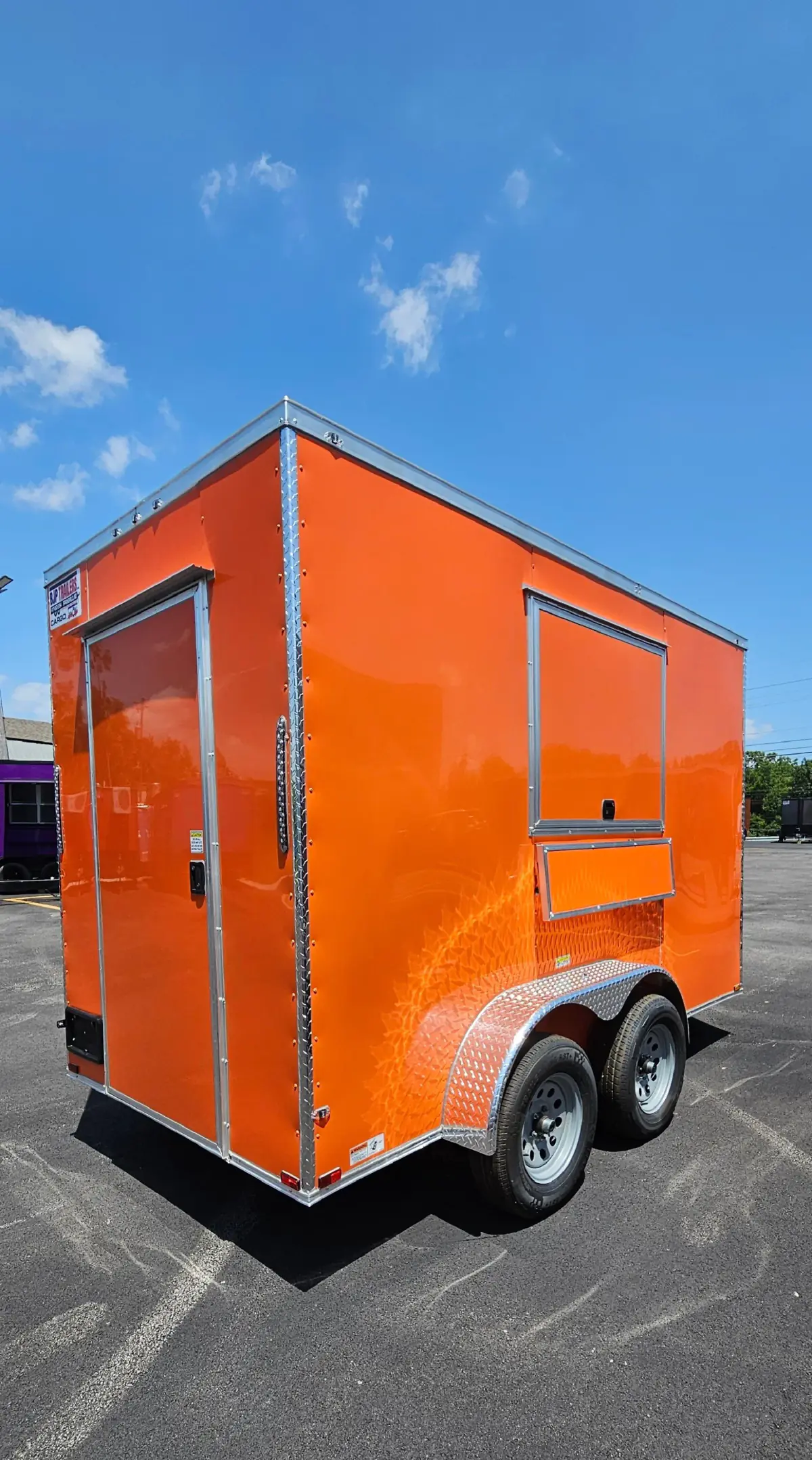
V-nose with 9” extra height • 36” RV side door in rear
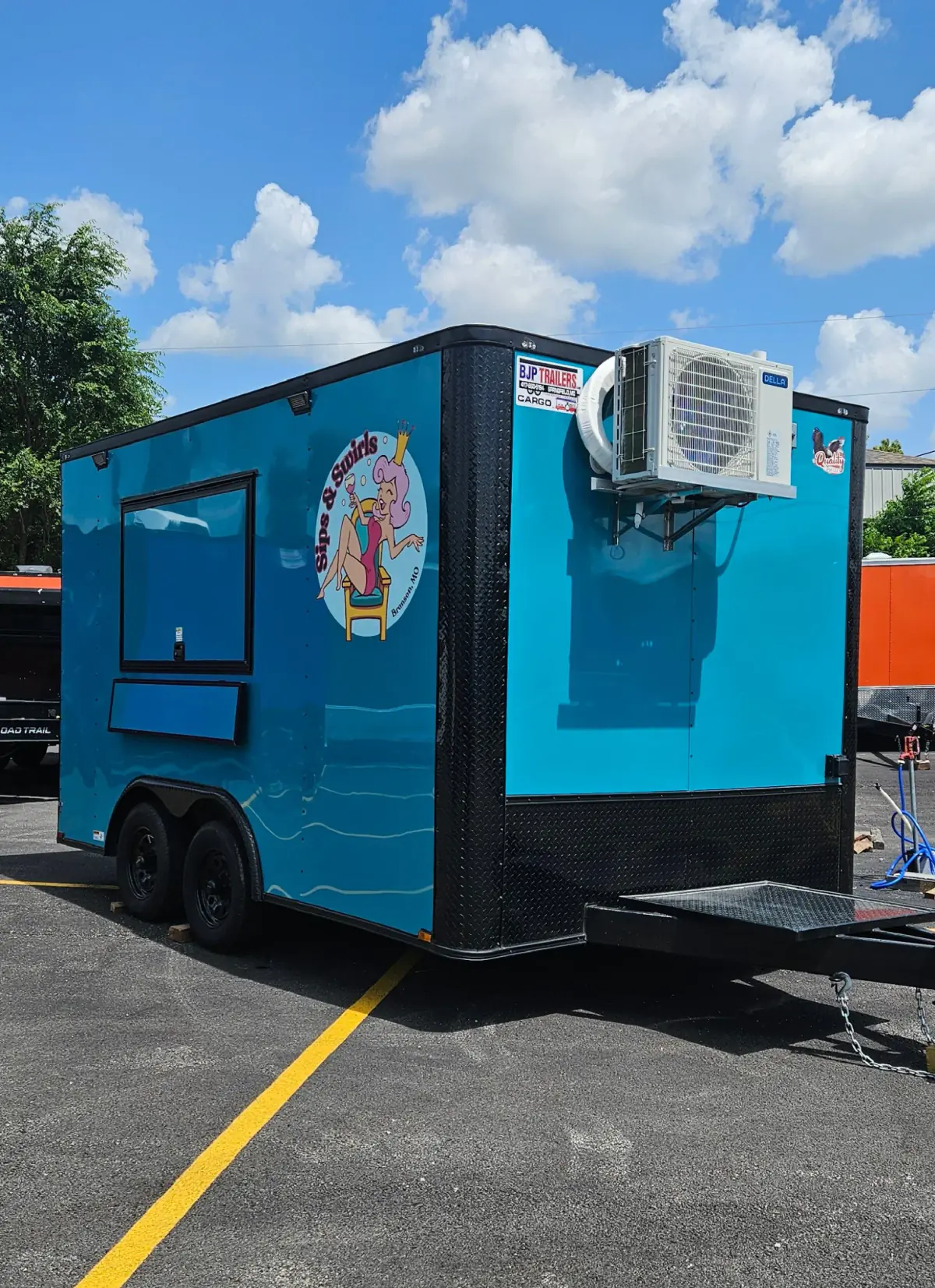
This ready-to-go concession trailer was originally laid out for a dirty-soda business.
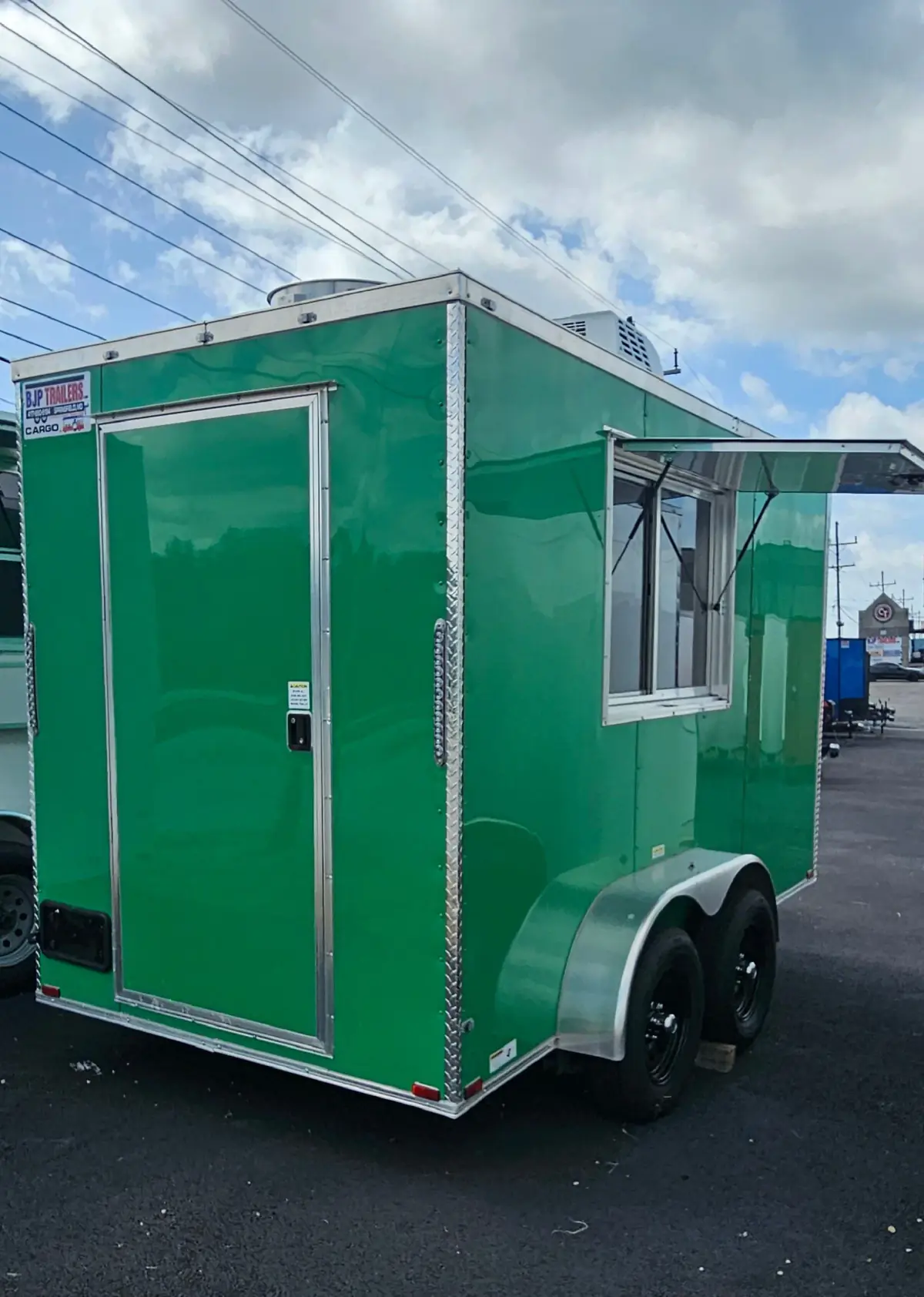
9” Extra Height • Air Conditioner
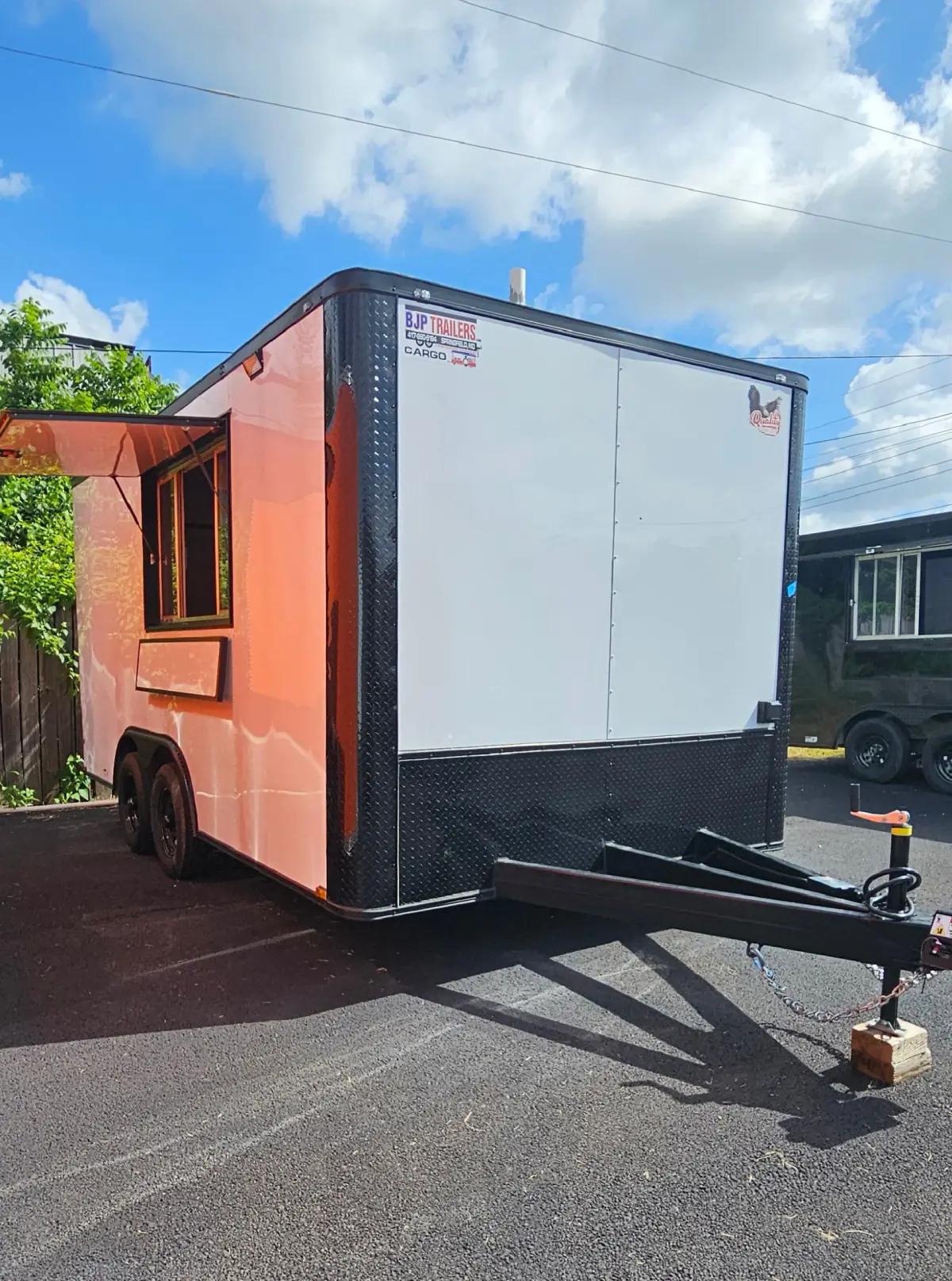
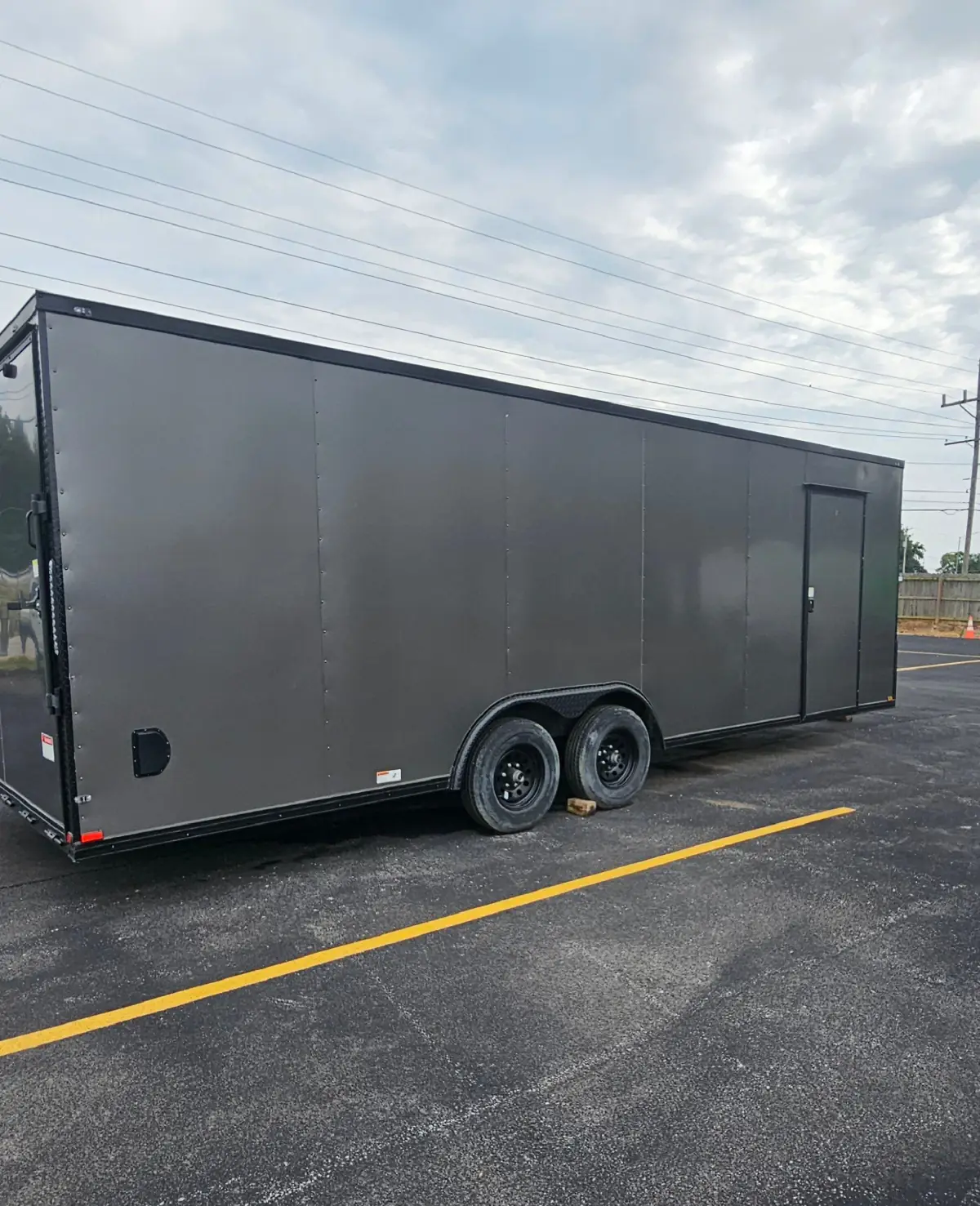
Slanted V-Nose with ATP Vertical Trim • Heavy Duty Ramp
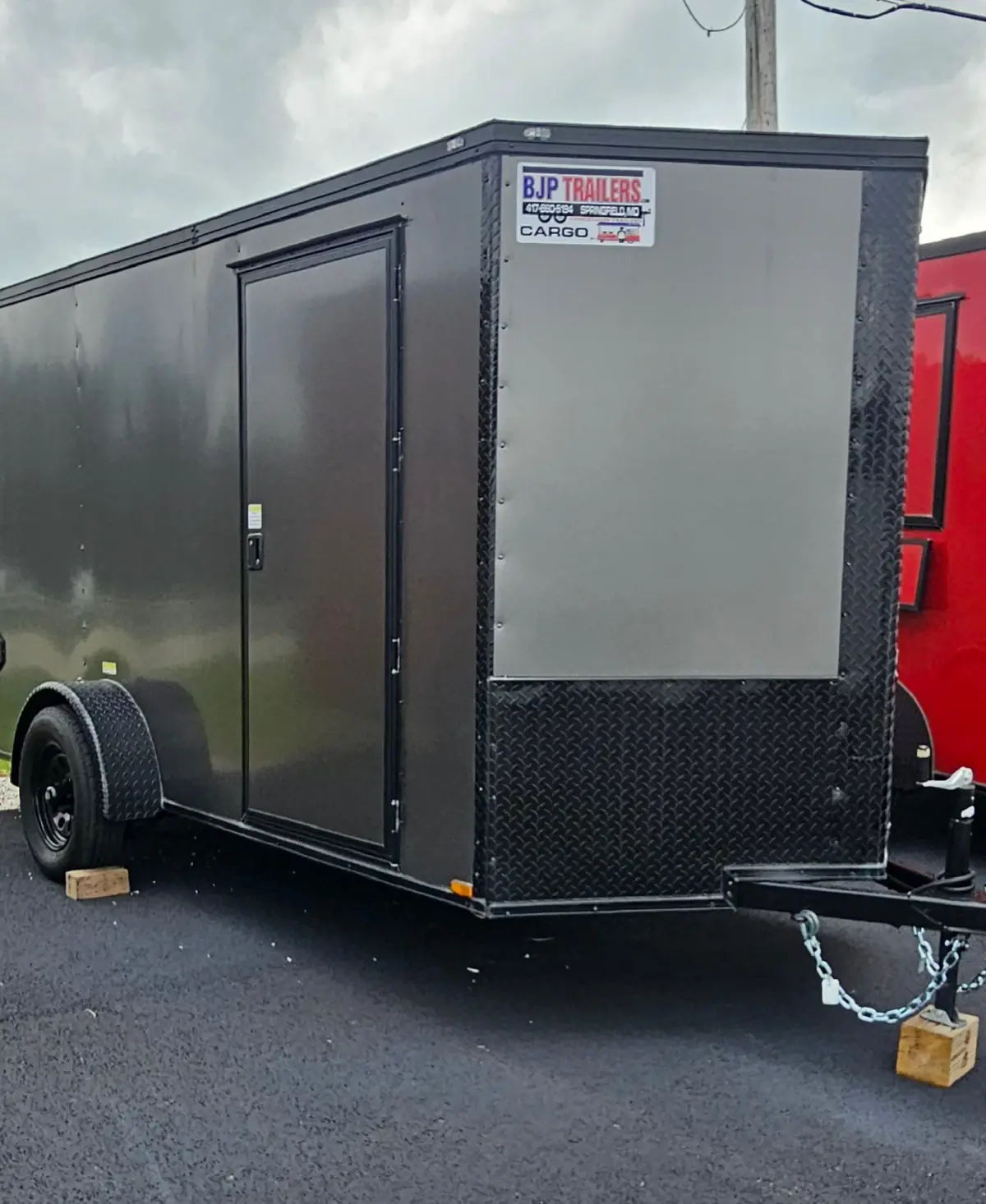
A custom food or concession trailer should be planned around the menu, peak production, crew roles, exact equipment models, utilities, loaded weight, destination and budget—not just colors or an exterior rendering.
Document menu items, batch sizes, holding time, expected busiest hour, crew count and the order in which food moves from storage to handoff.
List manufacturer, model, dimensions, weight, fuel or electrical load, water, drain, ventilation and required clearance for each major item.
Confirm floorplan, materials, equipment, utilities, change process, payment milestones, documentation, pickup or delivery and final acceptance in writing.
Ask BJP to confirm the specific trailer, stock number, physical location, availability, price and included equipment before traveling or paying. Inventory can move, and a photograph may not show every specification or condition detail.
For a custom project, use exact equipment models and measurable requirements. Keep the floorplan, equipment schedule, utility details, change approvals, payment milestones, pickup or delivery scope and acceptance terms with the signed agreement.
Authorities responsible for the intended operating address decide which permits, plans and inspections apply. Obtain their current written requirements and compare them with the proposed trailer before the purchase or build is final.
Keep menu, production volume, equipment models, crew flow, utilities, weight, drawings, revisions, commercial terms and handoff details together so every custom-build decision can be traced.
| Record | What to include | Who confirms it |
|---|---|---|
| Operating brief | Menu or work, volume, crew, service method, destinations and target date | Buyer and operating team |
| Trailer specification | Identity, dimensions, equipment, utilities, materials, running gear and documents | Seller or builder in writing |
| Review requirements | Plans, permits, inspections, licenses, site and event conditions | Authorities for the intended locations |
| Budget | Purchase, tax, transport, professional work, permits, insurance, setup and working cash | Buyer and chosen providers |
| Handoff plan | Pickup or carrier, receiving site, inspection, documents and discrepancy process | Buyer, seller and carrier |
Record dimensions, weight, fuel, voltage, amperage, water, drain, ventilation and clearance for major equipment. These values shape the shell and utility systems.
Label unverified prices, weights, dates and approval expectations. Do not let an early estimate become an unstated promise in the final plan.
When a detail changes, revise the drawing, equipment schedule, price and related system calculations together. Keep approval of the change with the project file.
Send the menu or work plan, crew count, exact equipment when known, utilities, desired size, tow vehicle, destination, written local requirements, budget range and target date. For an inventory unit, include its stock number.
Ask for important facts in a current written specification or sale document. Inventory and project details can change, so the signed documents should control the transaction.
The agencies responsible for each intended operating location decide their requirements. The buyer should obtain current instructions and arrange any required plan review or inspection; a seller cannot promise nationwide approval.
Bring your menu or hauling plan, compare current units, or start a custom layout and delivery quote.