BJP Trailers · Springfield, MissouriTrailer sales, custom builds & nationwide transport quotes(417) 860-5194
Food trailer concept guide

Catering and Event Food Trailers

Build flexible prep, hotel-pan storage, hot and cold holding, loading access, venue utilities, and backup plans into one mobile workspace.

Start with the rushMenu → equipment → utilities → layout

Support loading, finishing, buffet replenishment, boxed meals, private events, and cleanup without dedicating the entire trailer to one menu.

Core equipment brief

Build the specification from the work being done.

A useful catering & events quote begins with products, batch sizes, holding time, peak demand, staff roles, service style, operating sites, tow plan, and complete launch budget.

  • 01Flexible cooking and finishing line
  • 02Hotel-pan hot and cold holding
  • 03Reach-in refrigeration
  • 04Large prep and landing counters
  • 05Dry storage and transport restraints
  • 06Shore-power and generator options
Workflow & layout

Design the hardest ten minutes, not the easiest hour.

Service flow

Support loading, finishing, buffet replenishment, boxed meals, private events, and cleanup without dedicating the entire trailer to one menu.

Layout direction

A larger open work zone, strong storage plan, wide loading access, and flexible utility connections help the same trailer serve different venues.

Buyer guide

How to Compare Catering and Event Food Trailers for Sale

A strong trailer comparison begins with the work performed during the busiest service period—not a generic appliance list. Build a written operating brief around plated meals, buffet pans, boxed lunches, hors d'oeuvres, beverages, desserts and event-specific menus. Then compare current listings or a custom layout against the same menu, crew, utility, towing and local-review requirements.

01

Map production in order

Write the complete sequence: load-in, cold and dry storage, final prep, cooking or reheating, hot holding, plating, service, returns and breakdown. The floorplan should support that direction without sending raw ingredients, clean wares, finished orders and customers through the same space.

02

Use model numbers

“Refrigerator,” “oven” or “espresso machine” is not a specification. Record manufacturer, model, dimensions, weight, connection type, load and required clearances for every major item.

03

Check the whole trailer

Compare equipment with sinks, tanks, electrical service, propane, ventilation, fire protection, storage, axle capacity, loaded weight and the tow vehicle. One system can change several others.

Design for the real rush, not the quiet first hour.

Plan for a fast setup and a controlled breakdown. Keep clean service pieces separate from returned wares, and place hot and cold holding where staff can load a buffet or service line without blocking production.

Catering layouts often need more storage than a single-menu concession stand. Choose length after counting transport carriers, pans, tables, smallwares and the crew that must work during plating.

When reviewing catering & event food trailers for sale, ask BJP for the current equipment list, stock number, price, physical location and availability. Photos help establish condition and layout, but the signed specification should control the purchase decision. For a custom trailer, make every major equipment model and utility connection part of the written scope before fabrication begins.

Planning zoneQuestions to answerWhat to document
Flexible productionClear prep surfaces, modular countertop equipment and circuits or gas connections that support more than one menu.Confirm the exact model, dimensions, utility load and installed location.
Pan and transport storageSheet pans, hotel pans, carriers, disposables, serving pieces and protected storage for supplies used away from the trailer.Confirm the exact model, dimensions, utility load and installed location.
Venue connectionShore-power options, generator planning, freshwater, wastewater, leveling, lighting and access that can change from one event to the next.Confirm the exact model, dimensions, utility load and installed location.

Questions for local reviewers

Requirements depend on the operating address, menu, equipment and venue. Ask the health, fire, zoning, licensing and property authorities responsible for each intended site about approved preparation locations, on-board cooking limits, holding equipment, water supply, wastewater disposal, venue power and event-specific permits. Request written requirements before approving the final equipment plan.

A trailer cannot be declared approved for every jurisdiction in advance. Preserve the floorplan, equipment cut sheets, tank sizes, electrical schedule, gas details and ventilation documents that reviewers request.

Should I buy an in-stock trailer or request a custom layout?

An in-stock unit can shorten the path to purchase when its verified equipment, utilities, crew space and weight fit the plan. A custom direction is more appropriate when the required workflow or equipment cannot be supported without major changes. Compare both against the same written operating brief.

Can BJP deliver a catering & event trailer near me?

BJP can help request transport pricing to an exact receiving address nationwide. The trailer, dimensions, route, timing, carrier availability and site access affect the quote. BJP's only show lot is in Springfield; this page does not represent a separate local branch.

Who decides whether the finished trailer can operate?

The agencies responsible for the intended operating locations make that decision. Ask them to review the proposed floorplan, equipment and supporting documents before finalizing the purchase or custom specification.

Specification and launch planning

Turn a catering & event trailer idea into a quote buyers can compare.

Give every seller the same written project brief. State the planned menu—such as plated meals, buffet pans, boxed lunches, hors d'oeuvres, beverages, desserts and event-specific menus—then list crew, service volume, destination, tow vehicle and the exact equipment required. When quotes use the same inputs, differences in shell, systems, documentation and scope are easier to see.

01

Before requesting prices

Separate required equipment from optional equipment. Identify what must be installed, what can be carried as countertop equipment and what may be supplied at the service site. Record each model's connections and clearance.

02

While reviewing layouts

Trace load-in, cold and dry storage, final prep, cooking or reheating, hot holding, plating, service, returns and breakdown. Open appliance doors, imagine two people passing, locate clean and soiled wares, and test whether packaging, POS and pickup interrupt production.

03

Before approving the order

Compare the drawing, equipment schedule, materials, utilities, running gear, change process, documents, payment milestones, pickup or delivery scope and final acceptance terms with the signed agreement.

Budget beyond the trailer price.

A realistic catering & event launch budget can include equipment upgrades, taxes, title or registration, insurance, professional review, permits, commissary or base-of-operation costs, transport, tow-vehicle work, generator or site connections, wrap or signage, smallwares, initial inventory, training and working capital. Confirm which items are outside the trailer quote.

Plan opening, daily service and closing.

Opening work includes connecting utilities, checking temperatures, stocking handwashing supplies, preheating or cooling equipment and placing ingredients. Service depends on steady replenishment and safe waste handling. Closing requires cooling or discarding food correctly, washing, draining, securing equipment and preparing the trailer for travel. Storage and utility capacity should support all three periods.

Maintenance access matters too. Panels, pumps, filters, drains, refrigeration coils, propane components and fire systems should be reachable for qualified inspection and service. Ask which documents, manuals, warranties and serial numbers travel with the trailer.

Quote documentWhat it should answerBuyer check
FloorplanInterior dimensions, counters, equipment, sinks, doors, windows and aisleDoes it support the busiest workflow with required clearances?
Equipment scheduleManufacturer, model, quantity, mounting and connectionsDo models match the menu and reviewer requirements?
Utility scheduleElectrical service, circuits, gas, water, waste and ventilationHave qualified professionals calculated connected loads?
Running gearFrame, coupler, axles, brakes, tires and ratingsWhat is the expected loaded weight and tow-vehicle fit?
Commercial termsPrice, inclusions, exclusions, changes, timing and handoffAre verbal promises reflected in the signed documents?
What should I compare when two catering & event trailers have similar prices?

Compare the signed scope line by line: shell and running gear, exact equipment, electrical and gas systems, water and waste, ventilation, materials, documents, warranty, changes, pickup or transport and acceptance. A lower headline price may exclude required systems.

How early should local review begin?

Before final equipment placement. Ask the responsible offices what they need to review and whether plans must be submitted before construction or purchase. For this concept, ask specifically about approved preparation locations, on-board cooking limits, holding equipment, water supply, wastewater disposal, venue power and event-specific permits.

Does a longer trailer automatically provide better service?

No. Length can add equipment, storage and crew room, but it also adds weight, towing, transport and site-access considerations. The best size is the shortest configuration that safely supports the verified operation without crowding required work zones.

Relevant BJP inventory

Trailers to use as real layout references

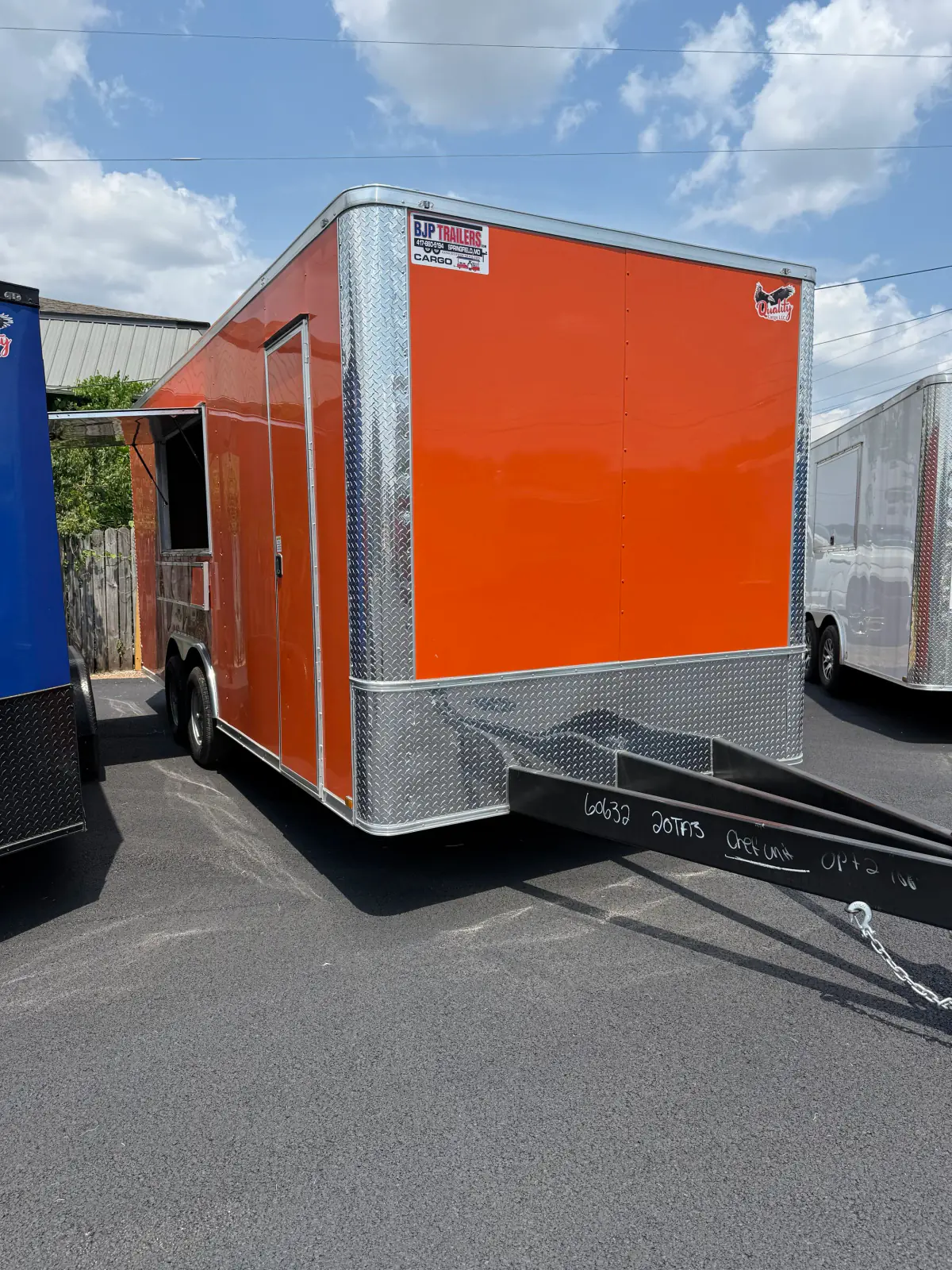
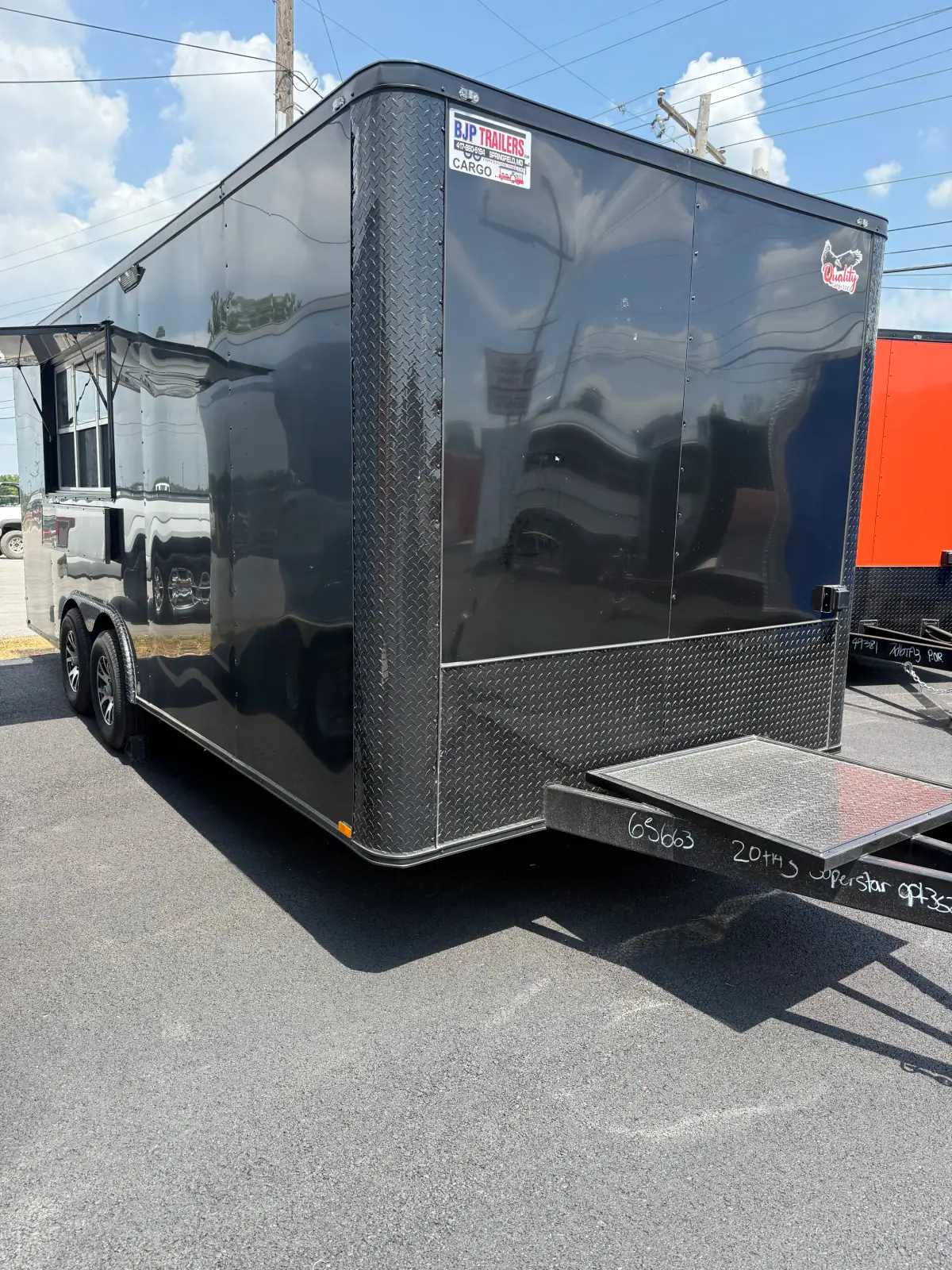
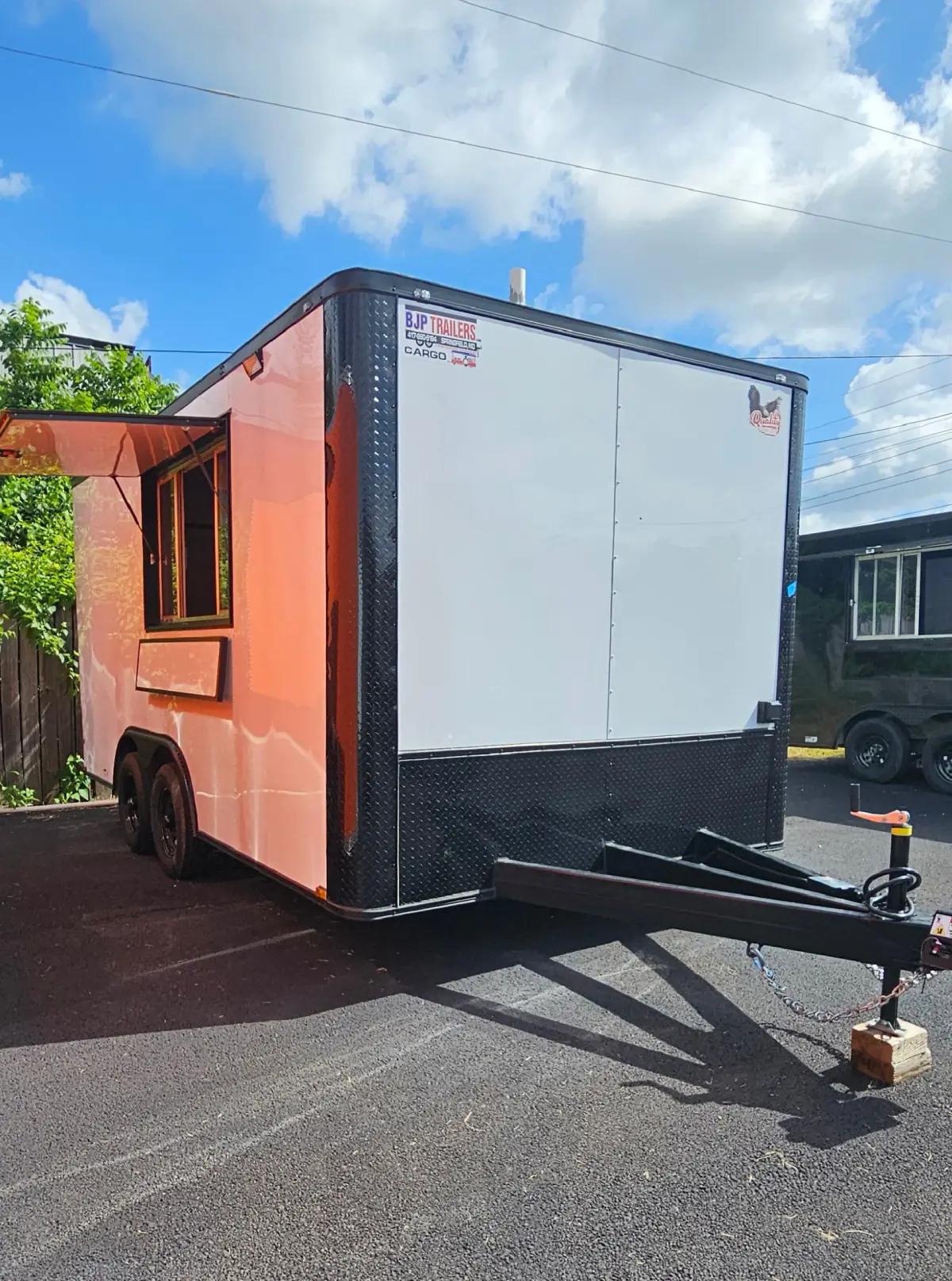
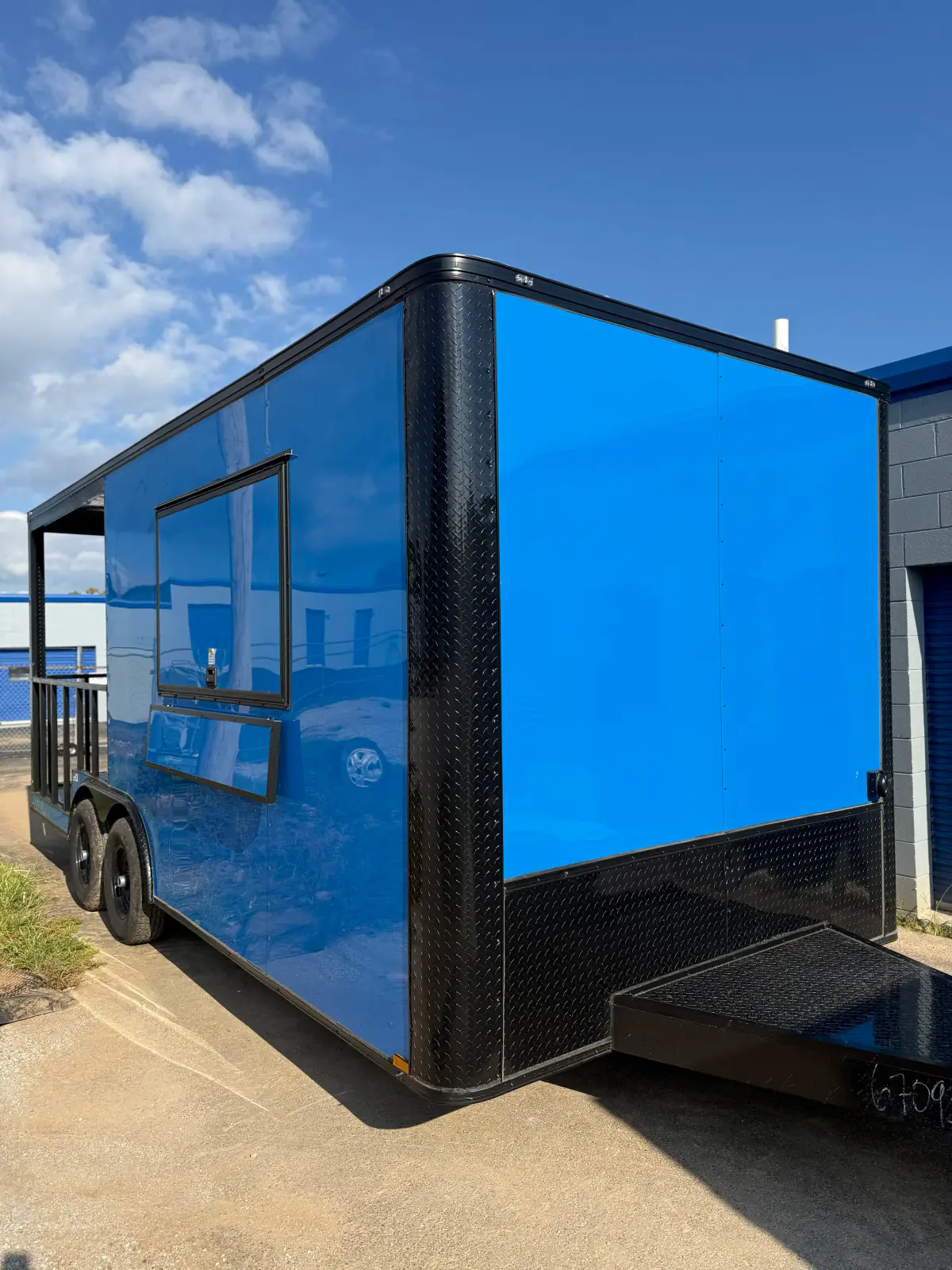
Compare larger concession trailers for flexible prep, hotel-pan storage, hot and cold holding, loading access and changing venue utilities.

See all current listings
Catering & Events questions

Build the trailer around the real operating plan.

What should I decide first for a catering & events trailer?

Build the plan around the largest event you can serve well, then check how the same trailer handles a smaller booking. Loading, holding and fast setup matter as much as the cook line.

What trailer size works for catering & events?

Catering size follows menu range, pan storage, crew, loading and whether food is cooked, finished or only held on site. Avoid paying for length that does not improve those jobs.

Can BJP help compare current inventory with a custom build?

Yes. Bring the operating plan and equipment list. BJP can compare those requirements with current units and explain where a custom layout may fit better.

Who confirms the final inspection requirements?

The health, fire, zoning, licensing and other offices responsible for the intended operating address decide what they will approve. Ask them to review the proposed plan before it is final.

Ready to shop or build?

Tell BJP what you need the trailer to do.

Bring your menu or hauling plan, compare current units, or start a custom layout and delivery quote.

Request a quote(417) 860-5194
Call BJP