Payload before floorplan
Estimate the real equipment and material weight, then confirm GVWR, axle, tire, coupler, hitch, and tow-vehicle limits.

Compare size, payload, axle configuration, ramp and side-door access, tie-downs, interior finish, electrical packages, and intended tow vehicle.
Estimate the real equipment and material weight, then confirm GVWR, axle, tire, coupler, hitch, and tow-vehicle limits.
Ramp capacity, door size, approach angle, interior clearance, and tie-down locations should fit the equipment being moved.
Lighting, outlets, ventilation, insulation, wall protection, shelving, and security should follow the job the trailer will perform.
An enclosed cargo trailer should be chosen around what goes through the door, where weight sits and how often the trailer is loaded. Exterior length alone does not confirm payload, usable interior dimensions, ramp capacity, tie-down locations or tow-vehicle fit.
List the heaviest machines, rolling width, ramp approach, tie-down points and where concentrated loads will sit over the axles.
Plan shelving, bins, tools, ladders, work surfaces, lighting and daily access before deciding which wall and floor systems are useful.
Added insulation, HVAC, power, cabinetry and equipment consume payload. Confirm the finished weight plan before beginning a conversion.
| Decision | What to verify | Why it matters |
|---|---|---|
| Payload | GVWR minus actual empty weight and installed options | Shows how much cargo capacity remains |
| Access | Rear ramp or doors, side door, opening height and threshold | Controls what can be loaded and how safely |
| Securement | D-rings, E-track, wall structure and floor rating | Controls how equipment can be restrained |
| Towing | Coupler, tongue weight, brakes, tires and tow rating | Controls compatibility and travel planning |
A listing is a useful starting point, not a substitute for current verification. Ask BJP to confirm the stock number, price, physical location, availability and included equipment before traveling. When comparing two trailers, put their published facts into the same checklist instead of relying on photos or broad category names.
Pickup and transport planning should use the exact trailer dimensions, weight, receiving address, timing and site access. The receiving party should have a safe place to inspect the unit, confirm paperwork and note condition at handoff.
For any regulated or commercial use, ask the authorities responsible for the intended operating address which documents and inspections apply. A trailer's presence on a sales page is not a promise of approval for every use or location.
Call BJP with the stock number. Ask the team to confirm current availability, price, physical location and specifications before you travel or make a payment.
BJP can help request transport pricing to an exact receiving address. The trailer, dimensions, route, timing, carrier availability and access affect the quote. The only BJP show lot is in Springfield.
Use the signed sale documents and current written specification. Compare them with the intended work, towing plan, budget and any requirements supplied by the authorities responsible for the final use.
Compare enclosed cargo trailers by payload and daily loading work. Put each candidate into one worksheet with identity, dimensions, capacities, installed equipment, condition, documents, current price, pickup or delivery and items that still need verification. That makes a current listing, used trailer and custom direction easier to compare on equivalent terms.
Ask for the stock number, live availability, physical location, current price, included items, recent photographs and a live-video walkaround. Match the unit to the published specification before traveling.
Review identity, ownership documents, structure, roof, floor, running gear, tires, brakes, wiring, plumbing, fuel systems, modifications, maintenance and any installed equipment. Price future work instead of assuming it is minor.
Define the work, payload, equipment, access, utility and travel needs first. Compare drawings and specifications—not renderings alone—and put inclusions, exclusions and changes into the signed scope.
GVWR is not payload. Payload is affected by the trailer's actual empty weight and every installed option, fluid, fuel, tool, supply and piece of cargo. Ask for available weight information and use qualified scales and professionals where appropriate. Check axle, tire, wheel, hitch and tow-vehicle ratings as part of one system.
Look for frame or tongue damage, corrosion, leaks, soft flooring, door alignment, tire age and wear, brake or bearing service, wiring changes and repairs. Operate ramps, jacks, hydraulics, appliances or utility systems when safe and appropriate. If expertise is needed, arrange an independent inspection before purchase.
Confirm who supplies title or transfer documents, temporary registration where applicable, keys, manuals and included accessories. For carrier delivery, use the exact trailer and address. At handoff, compare identity and condition with the signed documents and record any discrepancy.
Frame, axle setup, tires, empty weight, options and interior equipment can differ. Use actual ratings and available weight documents for the specific unit, not a generic assumption based on length.
A current inspection or qualified independent review can help identify condition and specification questions that photographs do not show. The appropriate inspection depends on the trailer category and intended use.
Confirm the seller, exact trailer identity, availability, current price, included items, condition, written terms, deposit treatment, remaining balance, documents, pickup or delivery and any unresolved inspection questions.
An enclosed cargo trailer should be chosen around what goes through the door, where weight sits and how often the trailer is loaded. Exterior length alone does not confirm payload, usable interior dimensions, ramp capacity, tie-down locations or tow-vehicle fit.
Confirm who is selling the trailer, the stock reference, title or VIN when applicable, current physical location, price, availability, deposit terms and the documents supplied at handoff.
Review frame, tongue, coupler, jack, axles, suspension, hubs, tires, wheels, brakes, lighting, roof, floor, doors and evidence of damage, leaks, repairs or modifications.
Operate or professionally review relevant electrical, water, propane, ventilation, refrigeration, hydraulics, ramps, controls and equipment. Record models, ratings and condition.
Budget for registration, insurance, storage, inspections, maintenance, tires, bearings, brakes, batteries, winterization, equipment service and repairs. Keep manuals, keys, serial numbers, warranties and service records in one file. Establish who will perform qualified work on specialized systems near the operating or storage location.
Transport is part of the purchase. Confirm tow-vehicle and hitch compatibility for pickup, or obtain a carrier quote based on the exact trailer and address. Inspect the unit at handoff, compare it with the signed documents and follow the agreed process if any identity, condition or included-item question appears.
When the trailer supports a regulated business, keep seller documentation separate from permits and approvals. The seller describes the unit; responsible agencies decide whether the proposed use and operating sites satisfy their current requirements.
Call BJP to confirm current physical location, specifications, availability, and price before traveling.
See all current listings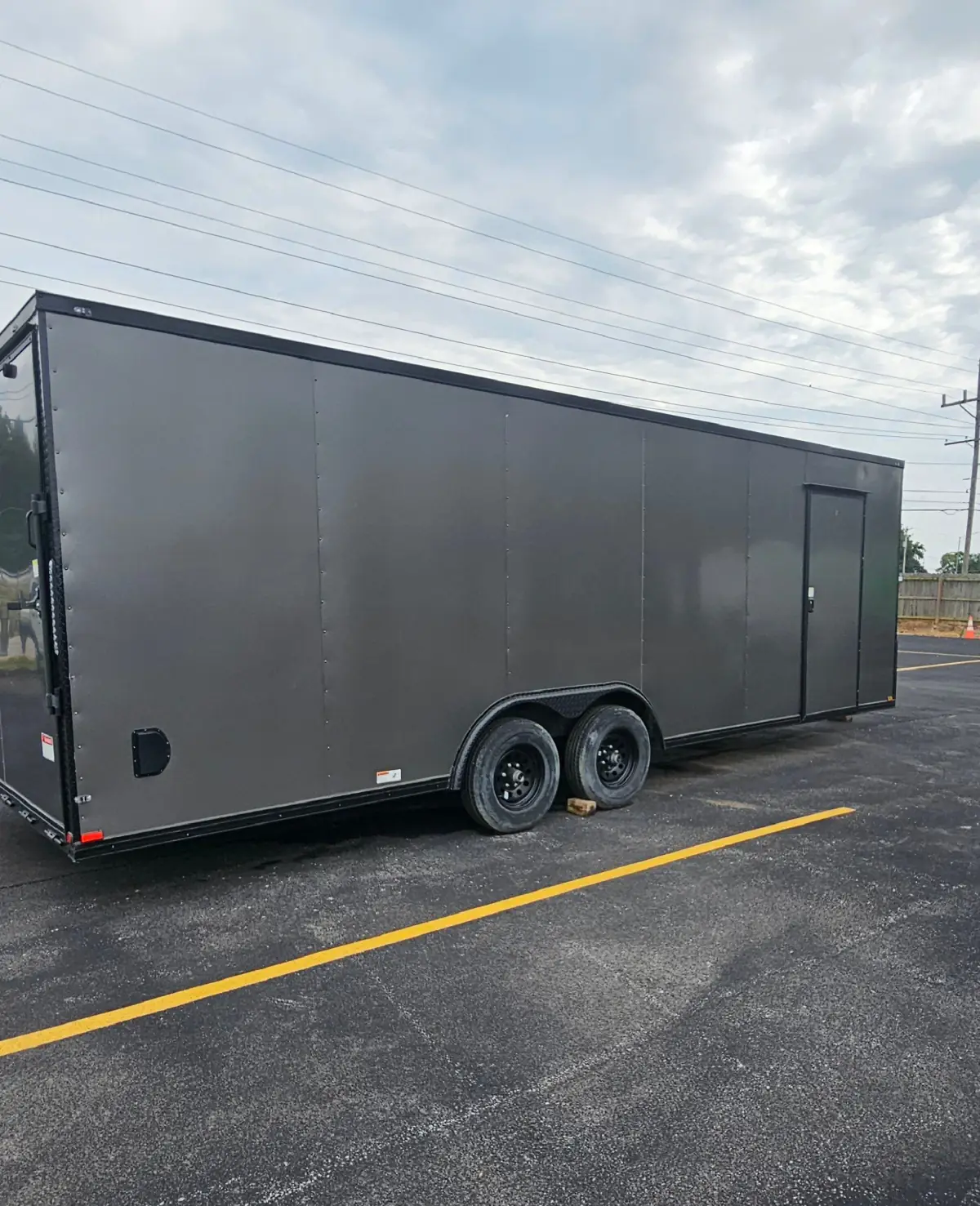
Slanted V-Nose with ATP Vertical Trim • Heavy Duty Ramp
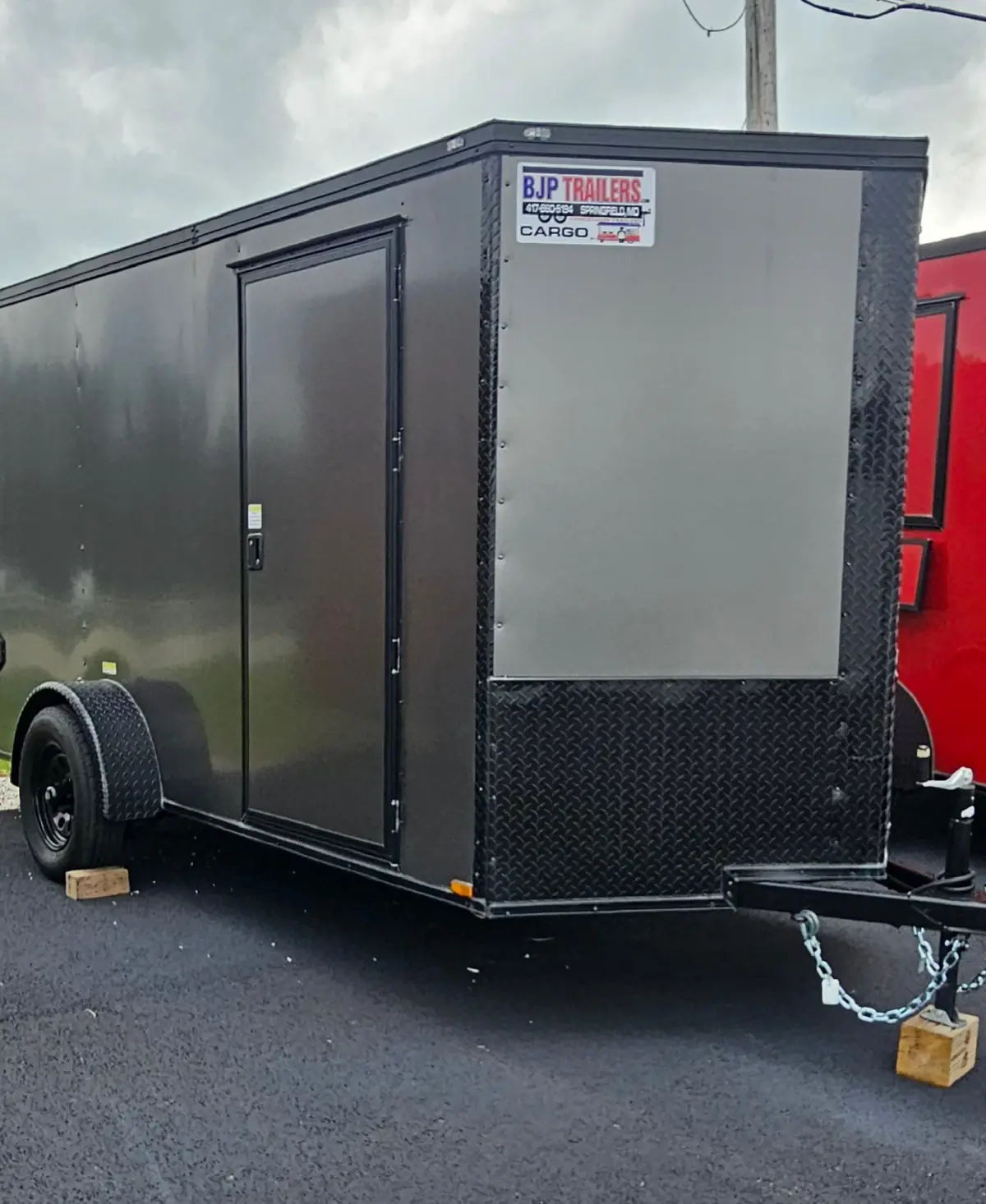
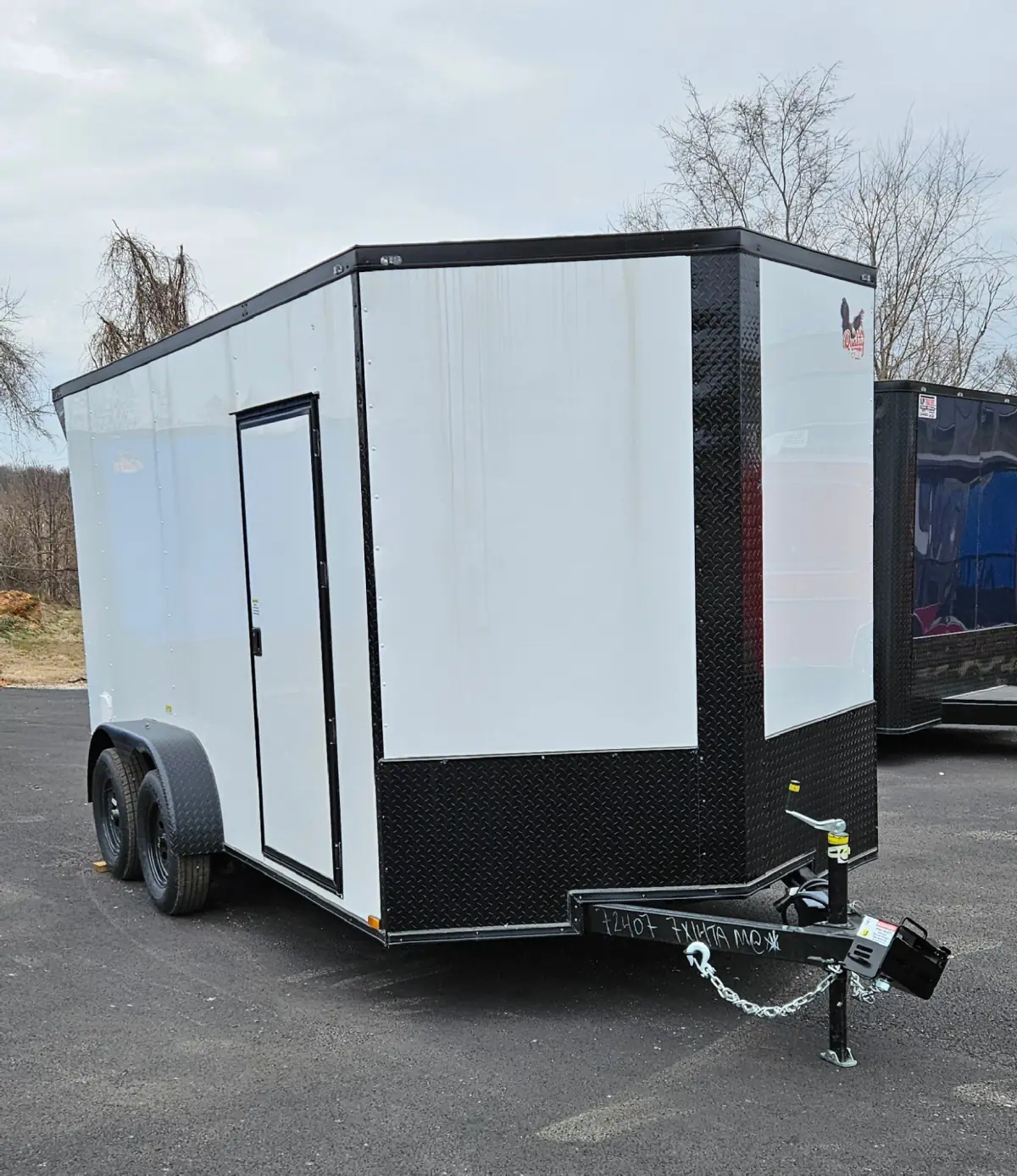
7X14TA - White with Blackout Package, 9” Extra Height, Rear Wing with Lights, 4 D-Rings
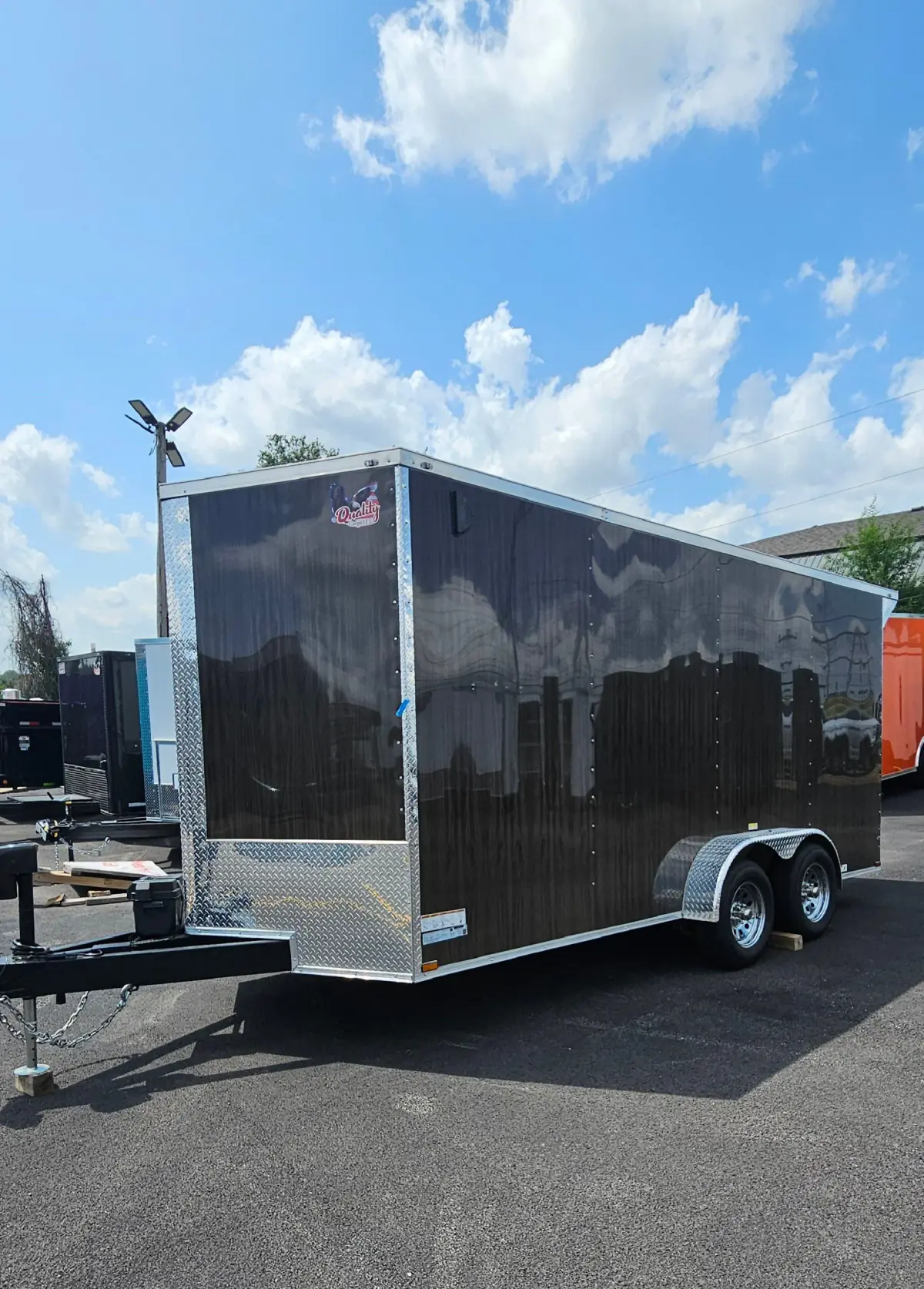
Customized Trailer • Rubber Coin Floor
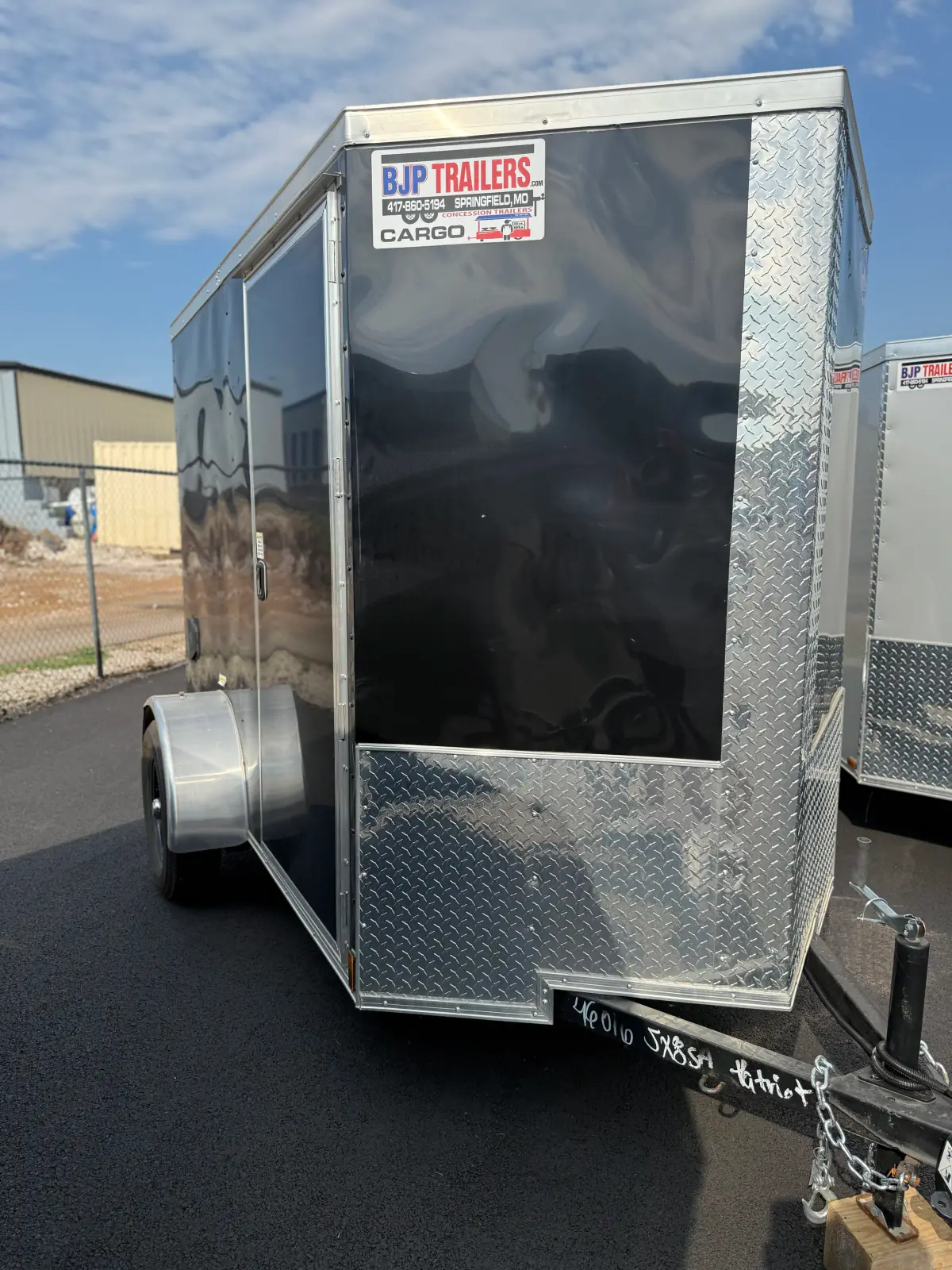
Compact black 5 × 8 enclosed cargo trailer. Call to confirm door configuration, payload, interior dimensions, price, and availability.
Bring your menu or hauling plan, compare current units, or start a custom layout and delivery quote.