
A food trailer is a commercial kitchen, utility system and towable workspace packed into a small footprint. The right fire-safety plan cannot be bolted on after the fryer, hood, propane lines, electrical panel, sinks and service windows have already claimed the available space.
This guide helps a buyer organize the equipment and documents that affect fire and health review. It does not replace a fire marshal, health department, licensed suppression contractor, qualified electrician, LP-gas professional, equipment manufacturer or the written requirements for the locations where the trailer will operate.
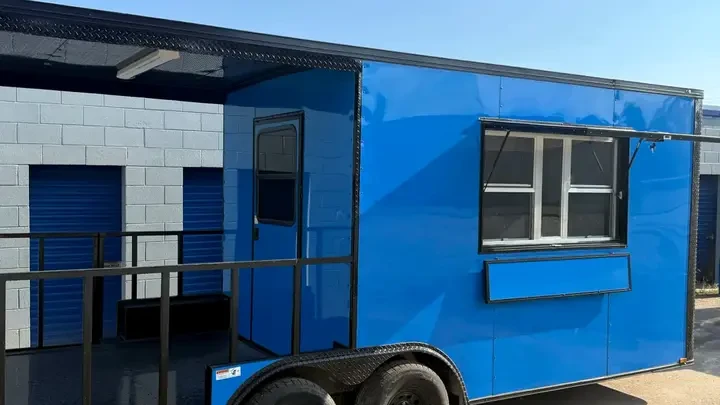
Food trailer fire safety starts with the exact menu and equipment schedule.
The answer can include a correctly classified hood and exhaust system, listed wet-chemical suppression, fuel or electrical interlocks, portable extinguishers, protected propane components, accessible shutoffs, carbon-monoxide or gas detection where required, safe generator placement, clear exits and documented inspection or service records. The required combination depends on the cooking process, appliances, fuels and locally adopted code.
Do not shop from a universal package list. A coffee-and-pastry trailer, a burger-and-fry line, a wood-fired pizza concept and a porch-mounted smoker create different heat, grease, combustion, ventilation, power, fuel and inspection questions. Start by documenting the operation, then compare current BJP food and concession trailer inventory or prepare a custom food trailer equipment plan.
Ask the fire and health authorities responsible for the first operating location what plans, equipment specifications, professional certifications and inspections they expect before purchase, construction or modification.
Build one coordinated food trailer equipment list—not separate shopping lists.
A useful equipment schedule records the manufacturer, model, dimensions, weight, listing information, fuel or voltage, amperage or BTU input, installation clearances, ventilation needs, water and drain connections, service access and travel restraints. That schedule should agree with the floorplan, electrical load calculation, propane demand, hood drawing and suppression design.
Use BJP's complete concession trailer equipment checklist for the broader specification, then use this article to isolate fire-protection and inspection questions.
Plan the hood, exhaust, makeup air and suppression system as one package.
A Type I hood is commonly used where cooking produces grease-laden vapors. A Type II hood may address heat, steam or condensation without grease. That distinction cannot be settled by a listing title or by choosing electric instead of gas. The reviewing authority needs the menu, cooking process and actual appliance specifications.
The hood is only one part of the system. Filters, overhang, exhaust volume, duct, fan discharge, makeup air, appliance clearances and the trailer's heating or cooling load affect how the workspace performs. A hood sized before the appliance line is known can be too short, misaligned or difficult to balance.
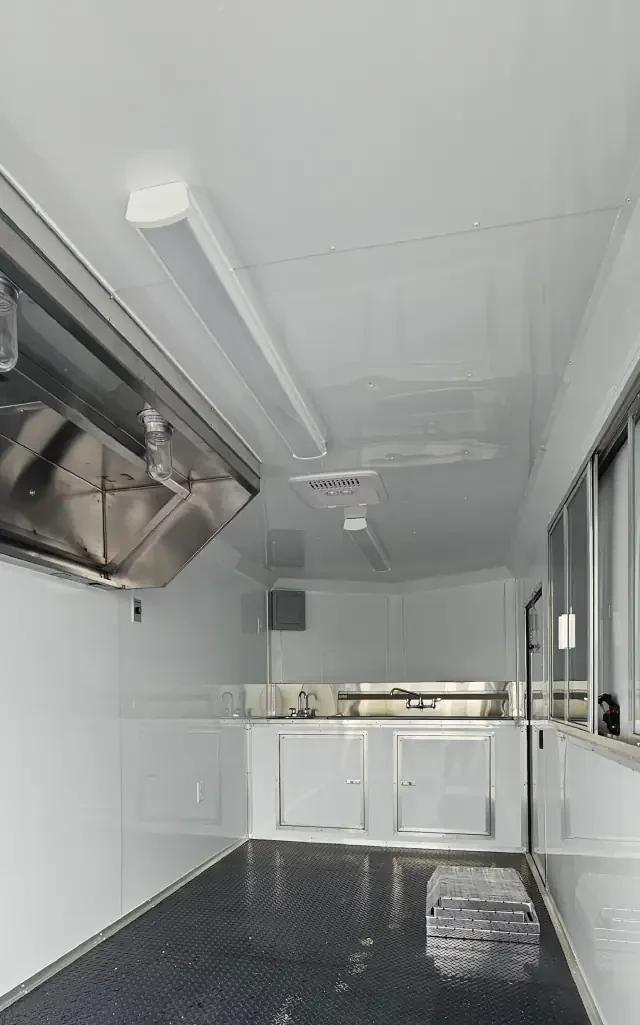
What a wet-chemical suppression review should connect.
- The protected appliance make, model, position and hazard type
- Nozzle type and location, detection components and manual activation
- Hood and duct coverage shown on the professional system documents
- Automatic fuel or electrical shutdown functions required for the cooking line
- Current service tags, test records, manuals and any prior discharge or repair history
- Professional review before an appliance is moved, replaced, added or converted to another fuel
A current-looking hood does not prove that the suppression layout still matches the appliances beneath it. Compare the installed line with the system drawing and have a qualified provider verify the complete protection package.
Choose extinguishers for the actual hazards and keep the exit usable.
NFPA's Class K guidance explains that Class K extinguishers address cooking oils and fats. A mobile kitchen can also contain electrical, propane, generator, paper, wood or ordinary combustible hazards, so the fire authority should confirm every required type, rating, quantity, location and service interval.
Portable extinguishers are not decorations and should not be buried by boxes, aprons or an open appliance door. Staff should know where the manual suppression control and fuel shutoffs are, how to report an emergency, when to evacuate and how to keep customers away from the trailer. Training and emergency procedures should follow the employer, equipment and local requirements.
- Keep the exit path clear. The route from each work position to the door should not depend on stepping around stored inventory, hot equipment or a blocked threshold.
- Mount required extinguishers accessibly. Confirm the correct bracket, visibility, reach and inspection status with the fire authority.
- Label emergency controls. Crew members should be able to identify the manual suppression control and fuel or electrical shutoffs without searching.
- Practice the response. Evacuation, calling emergency services and protecting the public take priority over trying to save equipment.
Size and protect the propane system around the complete appliance demand.
Propane planning includes listed cylinders, secure mounting for travel and operation, protective cages or guards where required, regulators, properly rated hoses or piping, accessible shutoffs, appliance connectors, ventilation, separation from ignition and openings, documented leak or pressure testing, and enough vaporization capacity for the combined cooking load.
OSHA's LP-gas standard addresses approved equipment, regulators and connections in covered workplaces, but it is not a substitute for the mobile-vending rules adopted by the fire authority. Do not repair, reroute or pressure-test a propane system without the qualified professional required for that work.
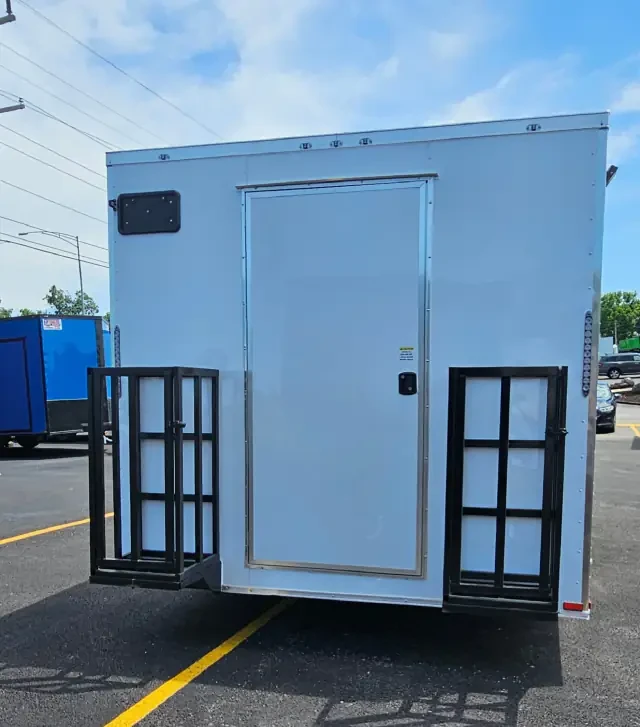
Calculate connected load, startup demand and generator placement before wiring.
Refrigerators, freezers, ice machines, water heaters, pumps, espresso equipment, air conditioning, warmers, lighting, ventilation fans, POS devices and receptacles can create a substantial combined load. Record nameplate information and startup demand, then have a qualified professional coordinate service size, panel capacity, dedicated circuits, required GFCI protection, conductor and receptacle ratings, shore connection, generator output and reserve capacity.
A portable generator adds fuel, hot surfaces, exhaust, noise, weather and cable-routing hazards. Follow the generator manufacturer and local fire authority for placement, grounding or bonding, connection method, refueling, clearances and exhaust direction. Never place a running generator where exhaust can enter the trailer or expose workers and customers.
Review the deeper BJP guide to food trailer power, propane and water planning before the utility package is priced.
Fire review and health review meet in the same floorplan.
The FDA Food Code is a model, not one automatically controlling national rule. State and local adoption determines which provisions apply. A mobile-food reviewer may examine the safe-water source, fresh and wastewater capacities, handwashing, warewashing, hot-water supply, refrigeration, hot holding, food-contact equipment, cleanable finishes, storage and waste handling.
These choices also affect fire and electrical planning. A larger water heater can change the propane or electrical load. Refrigeration adds startup demand and heat. Sink placement competes with cooking-line clearances and exit width. Hood makeup air changes comfort and HVAC needs. The entire specification should be reviewed as one system.
Springfield publishes a mobile-food inspection path, while Branson publishes its own fire pre-inspection checklist. A trailer operating in multiple places should verify each jurisdiction rather than treating one approval as nationwide clearance.
Request the records that let professionals verify the installed systems.
A used trailer can be a strong fit when its menu, appliance line and documented systems match the new operation. The risk rises when equipment has been moved, model plates are missing, the hood drawing no longer matches the line, service tags have lapsed or propane and electrical changes are undocumented.
| Record | Why it matters | What to verify |
|---|---|---|
| Included-equipment schedule | Separates installed assets from items shown only in photographs | Make, model, serial where available, condition, listing, fuel, voltage and sale inclusion |
| Hood and suppression file | Connects protected appliances to the designed system | Drawings, nozzles, controls, interlocks, current service tags and modification history |
| Propane records | Documents professional testing and repairs | Cylinders, regulators, piping, hose, shutoffs, appliance demand and destination reinspection |
| Electrical information | Supports load and compatibility review | Service size, panel schedule, circuits, generator or shore connection and professional changes |
| Water and sanitation file | Helps compare the unit with the health plan | Tank capacities, sinks, pump, heater, drains, manuals and winterization history |
| Prior inspections | Shows what was reviewed at a point in time | Jurisdiction, date, scope, corrections and whether a new destination requires another review |
Review BJP's broader food trailer buying guide and food trailer permits and inspections guide before comparing condition, documents, price and destination costs.
Use a short opening check and a documented professional service plan.
Operators should build their own checklist from manufacturer instructions, employer procedures, service-provider requirements and local code. The visual check below is a starting point; it is not permission to diagnose or repair fuel, electrical or suppression equipment.
- Clear exits and controls. Confirm that doors, aisles, manual controls, shutoffs and required extinguishers are visible and reachable.
- Inspect the cooking area visually. Look for grease buildup, blocked filters, loose storage, damaged guards or anything that has shifted during travel.
- Look for obvious electrical damage. Stop and refer frayed cords, hot plugs, open junctions, damaged receptacles or recurring breaker trips to a qualified professional.
- Check LP-gas components from a safe position. Do not operate with visible damage, an unusual odor, suspected leakage or an overdue professional inspection.
- Verify appliances are in their documented positions. Cooking equipment should not drift outside hood or nozzle coverage and must be travel-secured as designed.
- Keep combustibles away from heat. Packaging, towels, chemicals, fuel and trash should follow approved storage and disposal procedures.
- Review system status and service dates. Refer abnormal indicators, damaged components or expired tags to the appropriate service provider before opening.
Cleaning, testing, inspection and maintenance intervals should come from the adopted code, manufacturer and qualified providers. Retain records where the operator and inspector can find them.
Resolve inspection questions before money is committed.
- Write the menu and cooking process.Include preparation, cook-to-order steps, holding, cooling, reheating, warewashing and peak volume.
- Identify the first operating jurisdiction.Ask health, fire, zoning, licensing and site authorities what must be submitted and when.
- Create the exact equipment schedule.Use manufacturer models and utility data, not a generic appliance name.
- Coordinate floorplan and systems.Align hood, suppression, propane, electrical, water, drainage, storage, service windows, exits and weight.
- Submit plans when required.Resolve written comments before equipment is ordered or the trailer is modified.
- Verify the sale specification.Confirm what is included, who performs professional work, which records transfer and what the destination must inspect again.
Bring the menu, appliance list and destination—not just a trailer size.
BJP can help compare current units or organize a custom direction around the work the trailer must support.
Common questions about hoods, suppression, propane and inspections.
Does every food trailer need a fire suppression system?
No single answer applies to every trailer. The menu, cooking process, appliances, fuel, hood classification and adopted local code determine the fire-protection path. Fryers, griddles and other grease-producing commercial cooking commonly trigger requirements that do not apply to a sealed-food or beverage-only trailer. Ask the fire authority reviewing the first operating location before equipment is purchased or moved.
What type of hood does a food trailer need?
A Type I hood is commonly associated with cooking that produces grease-laden vapors. A Type II hood may address heat, steam or condensation where grease is not produced. The appliance models and cooking process—not the trailer's marketing label—should control the decision, and the local authority having jurisdiction makes the final determination.
Does an electric fryer or griddle eliminate the need for a hood?
Not automatically. Changing from gas to electric changes the utility plan, but it does not necessarily remove grease, smoke, heat or suppression concerns created by the cooking process. Submit the actual appliance specifications and menu to the reviewing authority instead of assuming electric equipment is exempt.
What is a Class K fire extinguisher used for?
Class K extinguishers are designed for hazards involving cooking oils and fats. A trailer can also have electrical, fuel, paper, wood or generator hazards that require different protection. The fire authority should confirm extinguisher type, rating, quantity, mounting location, service status and staff-training expectations for the specific operation.
Can I move cooking appliances after the suppression system is installed?
Do not move, add or replace protected cooking appliances without review by a qualified fire-suppression professional and the appropriate authority. Nozzle placement, detection, hood coverage, clearances and fuel or electrical shutoff functions are designed around an appliance lineup. A seemingly small move can make the documented protection plan inaccurate.
How often must a food trailer suppression system be inspected?
Use the interval required by the system listing, manufacturer, adopted code, service provider and local authority. Some jurisdictions publish six-month service expectations, but that is not a universal national rule. Keep current tags, inspection reports and service records with the trailer and confirm the next due date before buying a used unit.
What should I inspect on a used food trailer with propane?
Request the cylinder, regulator, hose, piping, shutoff, appliance and test documentation; look for visible damage or unapproved alterations; and have the system evaluated by a qualified LP-gas professional. Do not perform a do-it-yourself pressure test or repair. The destination fire authority may require a new inspection even when prior paperwork exists.
Does every concession trailer need a three-compartment sink?
Not every menu and jurisdiction is treated the same. Health reviewers may consider the food process, utensils, commissary plan, handwashing, warewashing and local code. Submit the menu, floorplan, equipment schedule, fresh-water plan and wastewater plan to the health authority that will permit the operation.
Can a food trailer approved in one city operate in another?
Prior approval is useful evidence, but it does not guarantee approval somewhere else. Cities, counties and states can adopt different code editions, amendments, permit processes and event rules. Confirm fire, health, zoning, vending and site requirements anywhere the trailer will operate.
What documents should come with a fully equipped food trailer?
Ask for a written included-equipment list, appliance make and model information, hood and suppression documentation, current service tags, propane records, electrical service and load information, tank capacities, manuals, prior inspection records, title or ownership documents and a record of material modifications. Verify what is current and what must be reinspected at the destination.
Safety and regulatory resources referenced in this guide.
- National Fire Protection Association: Food Truck Safety
- NFPA 96: Ventilation Control and Fire Protection of Commercial Cooking Operations
- NFPA 17A: Wet Chemical Extinguishing Systems
- NFPA: What Is a Class K Fire Extinguisher?
- Occupational Safety and Health Administration: 29 CFR 1910.110, LP-Gas
- U.S. Food and Drug Administration: Food Code
- Missouri Department of Health and Senior Services: Retail Food Safety
- City of Springfield: Mobile Food Establishments
- City of Branson Fire Department: Mobile Food Vehicle Pre-Inspection Checklist
NFPA standards, the FDA Food Code and government guidance inform planning, but enforceable requirements depend on adopted codes and the authorities responsible for the trailer's actual operating locations.