Concession / Food
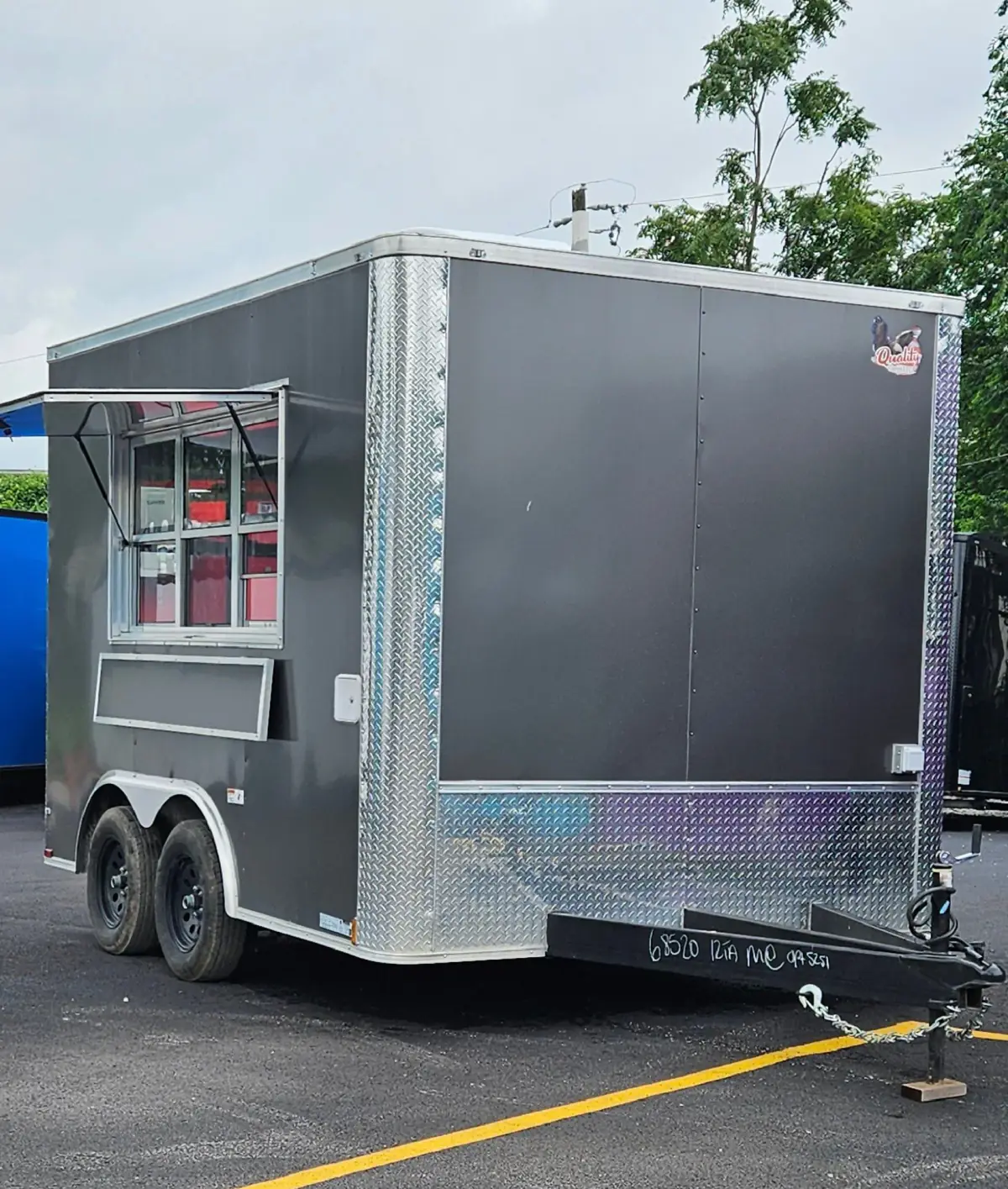
8.5×12 Gray Food & Concession Trailer #68520
8.5 × 12 Twin Axle Food trailer with a Concession Window in the back and on one side • Sink Package which includes a three-compartment sink and a Hand Washing Station

Compare current BJP food trailers and concession trailers, review a custom layout, and plan pickup or transport to an exact Franklin receiving address. This guide is one of 99 Wisconsin market pages; the Census Vintage 2025 record used for directory coverage lists Franklin at 36,687 residents. That figure explains coverage only and is not a demand forecast. Use the identity and sale documents and electrical load schedule as the first comparison checkpoints.
To compare the best concession trailers in Franklin, Wisconsin, use the same evidence standard for every unit. For Franklin, resolve the work sequence before deciding that a length or floorplan is suitable. Add transport, repairs, modifications, equipment, qualified trade work, setup, inspections, supplies, and receiving needs to the advertised price before comparing totals. Measure dry storage, refrigerated storage, packaging, smallwares, cleaning supplies, and travel restraints so inventory does not block work areas or exits. Do not treat proximity or exterior appearance as a substitute for that completed review.
A search for “#1 concession trailers in Franklin, Wisconsin” is not proof that a dealer or trailer is objectively first. The nearest verified guides in this directory are Greendale (about 4 miles straight-line), Greenfield (about 5 miles straight-line), and Muskego (about 6 miles straight-line). These are geographic references, not drive times, carrier quotes, branch locations, or shared permit rules. For a Franklin buyer, start by separating confirmed trailer facts from operating assumptions. Assign each crew position a work zone and test aisle width, door swing, service-window reach, hot-line clearance, and the path to sinks and storage. Use available weight information with axle, tire, brake, coupler, hitch, tongue-weight, tow-vehicle, route, and loaded-supply assumptions instead of judging capacity by length. Keep seller statements, public requirements, and qualified calculations clearly separated.
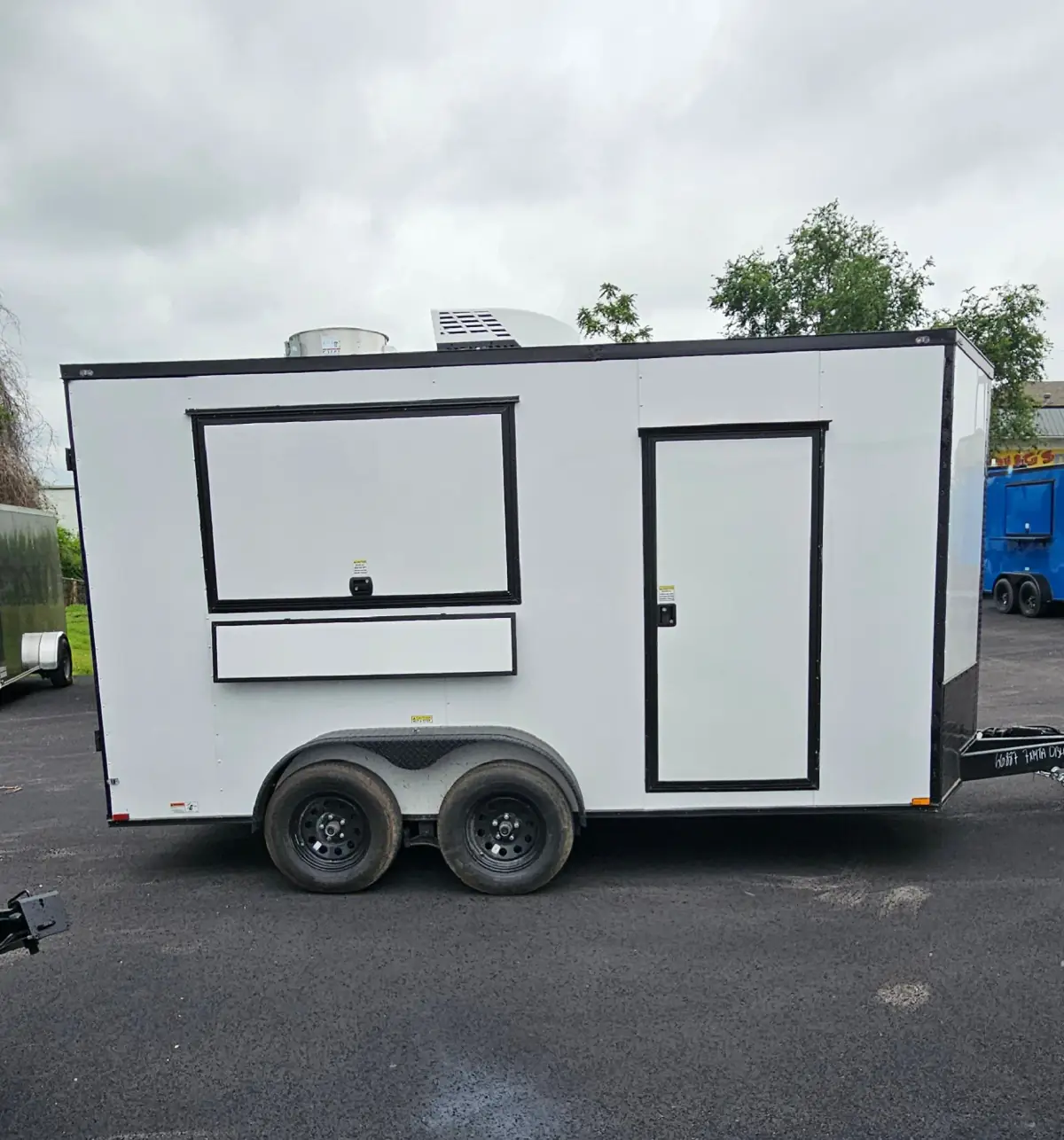
8.5 × 12 Twin Axle Food trailer with a Concession Window in the back and on one side • Sink Package which includes a three-compartment sink and a Hand Washing Station
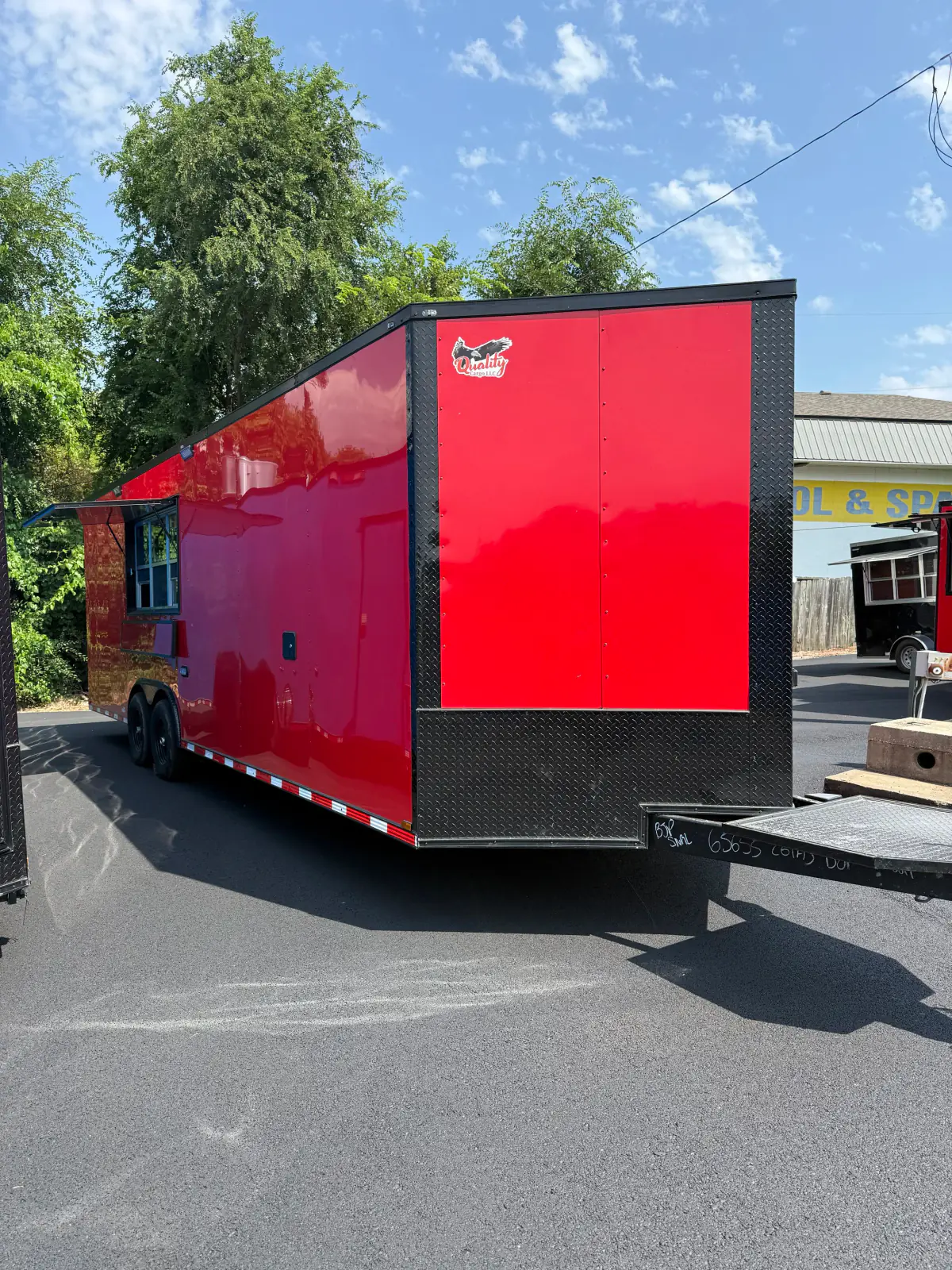
Special-order half-bath food trailer; not currently in stock.
The best food trailers in Franklin, Wisconsin are the documented options that fit the intended operation. For Franklin, resolve the work sequence before deciding that a length or floorplan is suitable. For a used unit, reconcile title or VIN records with structure, leaks, running gear, tires, brakes, appliances, modifications, connected systems, and likely repair work. Map the menu from cold storage through prep, cooking, holding, packaging, and handoff, then use the busiest-hour order count to size each work zone. If a fact is unavailable, keep it marked as unresolved rather than estimating from photographs.
The U.S. Census Bureau's July 1, 2025 estimate lists Franklin at 36,687 residents. BJP retains 99 Wisconsin market guides, covering every incorporated place in the state estimated at 10,000 or more residents plus useful existing community URLs. Population explains directory coverage; it is not presented as a demand forecast.
Coverage source for Franklin: U.S. Census Bureau Vintage 2025 city and town estimates.
For Franklin, compare what is documented now with the work still required before the trailer can operate. Reconcile sink use, tank capacity, water-heater recovery, pump access, refill timing, wastewater handling, and travel protection with the intended service day. Match fuel-burning equipment with clearances, hood coverage, suppression, makeup air, propane storage, shutoffs, travel restraints, and qualified installation records. Recheck the calculations whenever the equipment list, layout, destination, or tow plan changes.
Use one written Franklin brief to compare an in-stock unit, a used trailer, and a custom proposal. Measure dry storage, refrigerated storage, packaging, smallwares, cleaning supplies, and travel restraints so inventory does not block work areas or exits. Assign each crew position a work zone and test aisle width, door swing, service-window reach, hot-line clearance, and the path to sinks and storage. Keep the receiving address and intended operating addresses separate because they answer different questions.
Organize the Franklin quote around measurable requirements instead of a broad best-or-nearest label. Use available weight information with axle, tire, brake, coupler, hitch, tongue-weight, tow-vehicle, route, and loaded-supply assumptions instead of judging capacity by length. Record each electrical model, running and starting load, shore-power assumption, generator capacity, receptacle, disconnect, and service access before approving the system. If a fact is unavailable, keep it marked as unresolved rather than estimating from photographs.
A “near me” result for Franklin should identify the exact trailer, its current physical location, and the cost and work required to reach the receiving address. The nearest verified guides in this directory are Greendale (about 4 miles straight-line), Greenfield (about 5 miles straight-line), and Muskego (about 6 miles straight-line). These are geographic references, not drive times, carrier quotes, branch locations, or shared permit rules. For a project bound for Franklin, make unresolved assumptions visible before selecting a trailer. Match the stock reference, title or VIN, current photographs, physical location, included items, condition, price, availability, and written terms to the exact trailer being reviewed. Match fuel-burning equipment with clearances, hood coverage, suppression, makeup air, propane storage, shutoffs, travel restraints, and qualified installation records. The written result should identify the exact trailer, remaining work, and who must verify each item.
Before comparing prices for Franklin, write down how the trailer must work during its busiest service period. For custom work, require a dimensioned drawing and named equipment schedule showing counters, clearances, sinks, tanks, utilities, ventilation, windows, doors, storage, and revision history. Measure dry storage, refrigerated storage, packaging, smallwares, cleaning supplies, and travel restraints so inventory does not block work areas or exits. Use current records and an appropriate inspection before treating the shortlist as final.
For service or storage around Franklin, ask how freshwater, wastewater, pumps, batteries and equipment should be protected during freezing travel or shutdown. Use qualified instructions for winterization, propane, electrical and reopening work. Keep the Franklin comparison tied to facts that can be confirmed before travel, purchase, or construction. For a used unit, reconcile title or VIN records with structure, leaks, running gear, tires, brakes, appliances, modifications, connected systems, and likely repair work. Assign each crew position a work zone and test aisle width, door swing, service-window reach, hot-line clearance, and the path to sinks and storage. Keep the receiving address and intended operating addresses separate because they answer different questions.
| Compare | Evidence for Franklin buyers | Decision to resolve |
|---|---|---|
| Identity and sale status | Stock number, title or VIN, current photos, location, price, availability and terms | Is the written offer for the exact trailer reviewed? |
| Kitchen and workflow | Scaled floorplan, equipment models, sinks, storage, windows, aisle and clearances | Can the crew complete the busiest service period safely? |
| Connected systems | Electrical schedule, propane, water, waste, ventilation, suppression and manuals | Do qualified calculations support every installed item? |
| Weight and movement | Available weight information, axles, tires, brakes, coupler, tow vehicle and route | Can the complete loaded combination travel and arrive as planned? |
| Local review | Current written health, fire, zoning, licensing, event and property instructions | What must be reviewed before equipment placement is final? |
A route from Franklin into another municipality can change vending, property, event or inspection questions. The closest covered Wisconsin guides with verified coordinates include Greendale (about 4 miles straight-line), Greenfield (about 5 miles straight-line), Muskego (about 6 miles straight-line), Oak Creek (about 6 miles straight-line). Distances are geographic comparisons, not drive times or delivery promises. Build the Franklin decision file around the operation first and the trailer category second. Document the receiving address, approach width, turns, grades, gates, overhead clearance, surface condition, unloading plan, contact, and inspection-at-handoff process. Assign each crew position a work zone and test aisle width, door swing, service-window reach, hot-line clearance, and the path to sinks and storage. Keep the receiving address and intended operating addresses separate because they answer different questions.
The Franklin buying process is clearer when workflow, systems, movement, and documents are reviewed separately. For custom work, require a dimensioned drawing and named equipment schedule showing counters, clearances, sinks, tanks, utilities, ventilation, windows, doors, storage, and revision history. Match the stock reference, title or VIN, current photographs, physical location, included items, condition, price, availability, and written terms to the exact trailer being reviewed. Keep the receiving address and intended operating addresses separate because they answer different questions.
BJP's only physical show lot is at 5133 S Campbell Ave in Springfield, Missouri; this Franklin page is a buyer and destination-planning guide, not a local branch or dealership claim.
BJP can help request transport pricing to an exact Franklin receiving address; the quote depends on the precise trailer, dimensions, timing, route, carrier availability, insurance, and access. Before comparing prices for Franklin, write down how the trailer must work during its busiest service period. Add transport, repairs, modifications, equipment, qualified trade work, setup, inspections, supplies, and receiving needs to the advertised price before comparing totals. List refrigeration and freezer models, recovery demands, product-loading patterns, ventilation space, and the temperatures that must be maintained during service and travel. Keep the receiving address and intended operating addresses separate because they answer different questions.
Choose a trailer size for Franklin from menu, peak volume, crew, equipment, storage, utilities, loaded-weight, and tow-vehicle needs rather than the city label. For Franklin, resolve the work sequence before deciding that a length or floorplan is suitable. Test how orders move from payment through assembly and pickup, including menu visibility, queue placement, packaging storage, window height, weather protection, and customer handoff. Match the stock reference, title or VIN, current photographs, physical location, included items, condition, price, availability, and written terms to the exact trailer being reviewed. That process makes an in-stock trailer and a proposed custom layout easier to compare fairly.
No trailer seller can guarantee approval for an operating site in Franklin. Confirm current health, fire, zoning, licensing, property, and event requirements with the authorities responsible for the exact address before finalizing equipment or construction.
Bring your menu or hauling plan, compare current units, or start a custom layout and delivery quote.